Hospital bag for childbirth: a practical and adaptable list
Transparency: Latido is made by AppRadar, the publisher of this website.
Start with your hospital's instructions
A packing list can save you from last-minute decisions, but needs vary depending on the facility, length of stay, weather, and your preferences. Ask your maternity ward what they provide, what documents they require, and if they allow certain items. A list from an app is an editable reminder, not a universal rule.
Also check how to get to the hospital at night, where to park, what transportation to use, and what phone number to call if contractions start or your water breaks. These practical details can be just as important as your clothes. If you have urgent symptoms, don't delay leaving to finish packing a suitcase.
Documents and contact
Include your identification, health card or insurance card, pregnancy documentation, and any birth plan you wish to discuss. Keep a list of medications and allergies, and confirm which documents are required in your country. If you are sharing information with a companion, explain their location and how to contact the maternity team.
Bring your charger, a long cable if you find it useful, and your phone with important numbers saved, and also written on paper. If you rely on an app to access your notes, check its offline access and battery life. Keep essentials in an easy-to-find pocket instead of mixing them in with your clothes.
For the person giving birth
Pack comfortable clothing for your stay and return, including items suitable for breastfeeding or feeding, underwear, toiletries, glasses or contact lenses and accessories. Ask the hospital if they provide sanitary pads, hygiene products, and common medications. You don't need to buy everything on a commercial list.
A water bottle, lip balm, or a familiar garment can improve comfort. If you have specific mobility, communication, feeding, or health needs, write them down and discuss them before the birth. The bag is meant to support your plan, not to control the experience.
For the baby and the accompanying person
Check with the center how much newborn clothing you'll need, if they provide diapers, and what type of blanket or outfit is appropriate for travel. Choose easy-to-put-on clothes suitable for the weather. Check in advance the safe transport system applicable to your country; local facilities and regulations require up-to-date information.
The accompanying person can bring their ID, charger, clothing, water, and food according to the facility's rules. Discuss how to notify family members and what kind of support you prefer during your stay. Don't turn this conversation into a rigid script: circumstances can change.
When to prepare it and how to use Latido
You can start a list in advance and review it once you're more familiar with the hospital's guidelines. Divide the items into "ready," "last minute," and "to be confirmed with maternity." Leave a visible note for documents, your phone, and charger that you use daily.
The description of Latido includes a hospital bag checklist and a contraction timer. The checklist helps you organize items; the timer can help you explain frequency and duration. Neither tool determines when you should go. Follow the team's individualized instructions, especially if your water breaks, you bleed, or you are concerned about the baby.
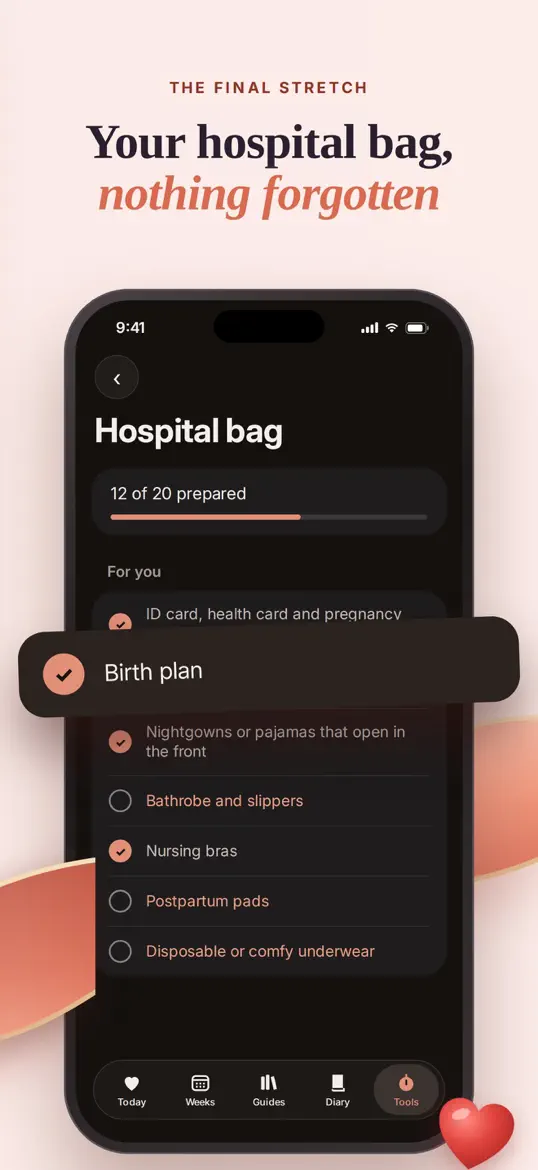
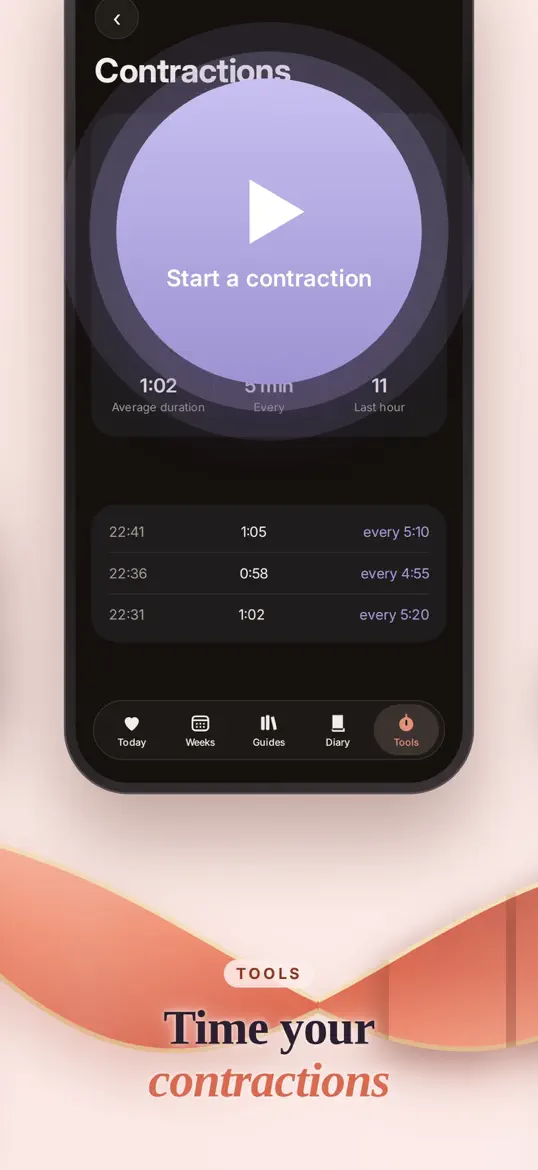
A contraction log may show intervals, but the start of labor isn't confirmed by a fixed rule for everyone. The NHS guidance describes signs of labor and when to contact maternity; your hospital may give different instructions. Save their number before you need it.
Review the list without turning it into a quiz
An incomplete bag is not a failure. Your safety depends on receiving the care you need, not on a forgotten item. If you can't pack everything in advance, prioritize documents, necessary medication, and ways to contact the facility.
Your preferences and needs may change after giving birth. Ask someone you trust to bring extra items if needed. The Latido list is an organizational aid: personalize it and remove items your hospital already provides.
A list by priorities
Separate the bag into three layers. The first contains documents, necessary medication, hospital contact information, and essential items for leaving. The second contains clothing and toiletries for a likely stay. The third includes comfort items that you can add if there's still room. This structure prevents a long list from making a charger seem just as urgent as a document or treatment.
Also prepare a list of things you use daily that you can't pack yet: glasses, phone, charger, or medication. Place it by the door or share it with your birth partner. Check regularly for any changes to the hospital's instructions. If you're traveling while pregnant, ask the staff what documents and contacts you should bring, without assuming that the same hospital will deliver the baby.
The list should be adapted for a planned cesarean, multiple births, or any specific needs as instructed by the team. Do not copy a list from another country without checking: health cards, provided items, and visiting policies vary. The goal is to reduce small logistical decisions while retaining room for changes.
Preparation beyond the suitcase
Talk to your companion about who will call the center, how to get there, and what support you would like during your stay. Note down if there are any people you want to notify only after the birth. A simple conversation about communication preferences can prevent unwanted messages during an intense time. If you have other dependents, prepare a flexible plan for their care.
Ask the hospital about their guidelines for feeding, support, visits, and discharge. If a general online guide says something different, use the hospital's current information. You don't need a perfect hospital bag: what's important is knowing when to ask for help and how to get there. A contraction timer can provide some useful information, but it should never delay calling for help if you're bleeding, your water breaks, or you're worried about the baby.
After packing your bag, check its contents with someone who can find the essentials. Store clothes in separate bags if that helps, but avoid buying organizers you don't need. The Latido list can be a digital reminder; personalize it to suit your circumstances and remove anything that doesn't make sense. Having fewer items and knowing exactly where they are is often more practical than carrying a lot "just in case."
Preparation includes things that don't fit in your bag. Confirm whether you need to leave keys with a trusted person, how to care for pets or dependent relatives, and who can bring you items after the birth. If you plan to drive home, check local regulations regarding transporting newborns in advance. Prioritize your contacts to avoid multiple messages at once. Agree on who will communicate updates if you prefer to rest. Keep hospital access instructions and an alternative transportation plan handy. None of these tasks require buying special products; it's about minimizing last-minute decisions and knowing who to call when the time comes.
To keep your list up-to-date, review once what items the hospital provides and remove duplicates. Mark off what you've already packed and separate what you'll add on your way out. If something is still missing, there's no need to rush out and buy it. Share the bag's location with whoever will be accompanying you and agree on how you'll communicate if plans change. Preparation also involves knowing the way, the phone number, and the signs you need to call for. A comprehensive checklist doesn't replace those decisions, but it can free up your attention for them. Keep a short note with any individual instructions you received during your follow-up: this could include treatments, accessibility needs, or communication preferences. If circumstances change, review this note with your team. Lists published online are generic and don't take into account your hospital's organization or your medical history. A simple bag, checked in advance and accompanied by clear contacts, can be more helpful than a huge list bought on impulse.
Frequently Asked Questions
How many weeks in advance should I pack my bag?
There is no single week. Consult your center's guidelines and start when it's practical for you; if you are at risk of premature birth, seek individual advice.
Do I need to bring diapers and sanitary pads?
It depends on the hospital. Ask what supplies they provide before buying or filling your bag.
Does the contraction timer tell you when to go to the hospital?
No. It records intervals; decisions are based on your symptoms and maternity instructions.
Does Latido replace prenatal appointments?
No. The illustrations, lists, and records are meant to guide you and help you prepare questions. An app does not diagnose complications or replace the examinations, tests, and decisions of your healthcare team.
Sources and review date
Content reviewed on November 11, 2026. Sources: NHS, Signs of Labor; Latido App Store; ACOG, Prenatal Care. This information is general and does not replace individual assessment by a midwife or other healthcare professional.