How long does it take to get over a breakup: what the research says
Transparency: Kintsugi is made by AppRadar, the publisher of this website.
There is no single timeframe for getting over a breakup: most people recover eventually, but the pace varies greatly. In a 2025 study of 328 adults who had been in a relationship for more than two years, the emotional bond with the ex had narrowed by about half by four years on average; other studies measure distress rather than attachment, and that tends to ease sooner. The rule that it takes 'half as long as the relationship' is not supported by research (British Psychological Society).
What each study measures and why the figures don't match
When someone says "it took me three months" or "four years," they may be talking about different things: stopping crying, stopping thinking about the person every day, ceasing to feel attached, or learning to trust a partner again. Each study measures one of these things, and therefore their figures are not comparable.
Intense distress is strongest at the beginning. In a follow-up study of 58 young people, those who had recently broken up showed greater emotional volatility than those who were still with their partner, especially immediately after the breakup, and contact with the ex slowed the decline in love and sadness (Sbarra & Emery, 2005). The UK's NHS generally notes that low mood usually improves after a few days or weeks.
What the four-year study says
The study by Chong and Fraley (2025) asked 328 adults, in relationships averaging almost five years and separated for a similar amount of time, how much they still sought support, comfort, and security from their ex. Over time, the bond faded until it was almost like that of a stranger; the midpoint was reached around four years. That describes attachment, not that someone is unwell for four years: acute pain is much shorter.
What factors change the pace
According to the same study, people with a more avoidant attachment style detached sooner than those with an anxious style, who remained more attached and sought more comfort from their ex. Having a new partner did not accelerate the process, and having children with an ex caused attachment to decrease sooner, perhaps due to co-parenting tensions. The most consistent factor was contact: those who spoke often with their ex, in person or online, detached much less.
Other factors associated with better recovery in small studies include treating yourself with kindness (in 109 adults going through a divorce, self-compassion was associated with less distress nine months later; Sbarra, Smith, & Mehl, 2012) and avoiding monitoring your ex on social media (Marshall, 2012). These are observational studies: they indicate associations, not guarantees.
What is usually normal at each stage
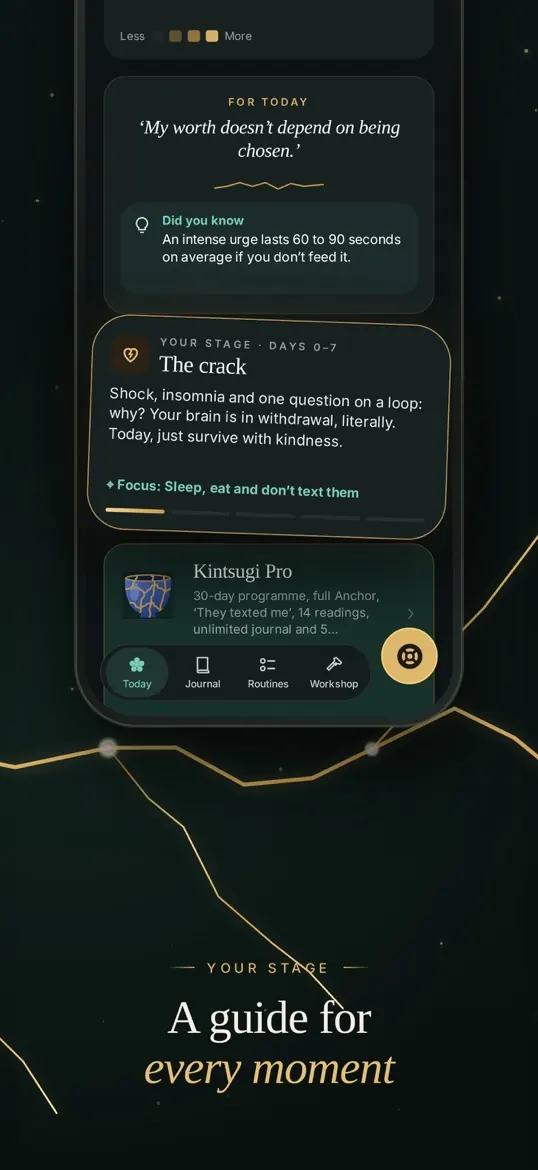
These guidelines are not clinical or based on specific studies; they describe what many people report. In the first few weeks, it's common to alternate between crying, anger, relief, and a feeling of emptiness, along with changes in sleep and appetite. Between one and three months, more days with preoccupied thoughts usually appear, although relapses can be sudden. After several months, the bad spells typically become less frequent, without disappearing completely or giving any warning.
Progress is not a straight line. A bad day after several good ones is not a setback: it's just another wave.
What you can do in the meantime
Waiting is not the same as staying still. What you can control is maintaining the basics (sleep, food, movement), reducing opportunities to reopen the wound, and talking to someone you trust; we detail this day by day in how to get over a breakup: a guide for the first 30 days. None of these things set an end date, but they make the journey more bearable.
It's also wise to be wary of promised timeframes: "beat it in 21 days" or "you'll be as good as new in 90 days" are marketing claims, not results measured by the research cited on this page.
Tough dates: birthdays, anniversaries, and holidays
Symbolic dates can reopen old wounds even if you've moved on. Write them down in advance and make a plan: meet up with someone, fill the morning, avoid places you used to frequent, and decide beforehand that you won't write on that day.
Indicative signs that you are moving forward
You spend more time without thinking about your ex. You sleep and eat better. You can look at a photo without it ruining your day. You make plans that don't revolve around the breakup. You remember something good without it hurting as much. If you don't see any of these signs after several weeks, it doesn't mean you're failing; it might be a good time to talk to someone.
When to stop waiting and ask for help
According to the NHS, you should consult a doctor if you have been feeling low for more than two weeks, if you are finding it difficult to cope, or if what you are doing on your own is not helping. Also seek help if you are unable to work, sleep, or eat, or if your distress worsens instead of easing. If you are thinking of harming yourself, call 024 (Spain's free, 24-hour suicide helpline) or 112 immediately; in other countries, find the local service at findahelpline.com.
How to measure your progress without obsessing
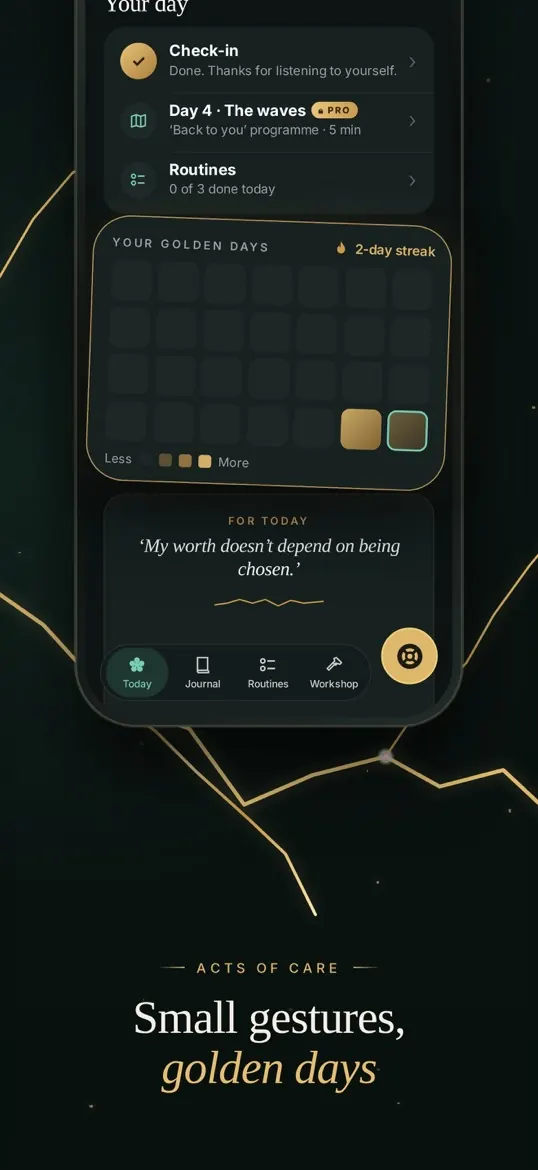
A monthly review is enough: jot down how many good days you had, how you slept, and what was most difficult. Kintsugi for iPhone and Kintsugi for Android include a monthly repair index and support for difficult dates (AppRadar, the publisher of this site, develops Kintsugi); a notebook will also do. If you want to see more options, check out the best apps for getting over a breakup.
Frequently Asked Questions
How long does the grieving process after a breakup last?
There is no fixed duration. The most intense pain is usually concentrated in the first few weeks, while emotional attachment can take years to disappear completely, according to the 2025 study of 328 adults.
Is it true that it takes half the time the relationship lasted?
No. That rule appears in popular culture, but recent research on attachment does not support it.
Does a new partner help you get over it faster?
In the 2025 study, starting a new relationship did not accelerate detachment. Having a new partner can be positive for other reasons, but it's not a shortcut.
Why am I still feeling unwell after months?
This could be due to attachment style, continued contact, a very long or intense relationship, or other circumstances. If your mood remains low or you are having difficulty functioning after more than two weeks, consult a professional.
Is it normal to have emotional relapses?
Yes. Waves of sadness can return with a song, a date, or some news. Their return doesn't mean you've lost the progress you've made.
Sources and revision date
Content reviewed 12 November 2026. Sources: British Psychological Society, Research Digest (2025), on Chong and Fraley; Sbarra and Emery (2005), Personal Relationships; Sbarra, Smith and Mehl (2012), Psychological Science; Marshall (2012), Cyberpsychology, Behavior, and Social Networking; NHS, Low Mood and Depression. This information is general and does not replace the assessment of a healthcare professional.