Pregnancy week by week: a guide to understanding each trimester
Transparency: Latido is made by AppRadar, the publisher of this website.
How to count weeks
Gestational age is usually counted from the first day of the last menstrual period. According to ACOG, pregnancy lasts approximately 40 weeks from that date, and the first part of the count precedes fertilization. That's why the weeks on the app may look different from the days since conception. If your healthcare provider adjusts the estimated due date, use the date agreed upon during your appointment.
A weekly guide helps frame questions, but it doesn't predict exactly when a symptom will appear or how big each baby will be. The figures published are averages, and the comparisons to fruit are metaphors for size. They should not be used to interpret an ultrasound or to draw conclusions about individual fetal growth.
First trimester: from week 1 to week 13
ACOG defines the first trimester as running from the last menstrual period until 13 weeks and 6 days. During these weeks, structures such as the brain, spine, and heart tissue begin to form, and the foundations of the major organs develop. Not everything can be observed at the same time or in every scan: the timing of the tests is determined by the healthcare team.
At first, you may experience fatigue, breast changes, nausea, or sensitivity to smells, but it's also possible to have few symptoms. The intensity of the discomfort alone does not indicate whether the pregnancy is progressing well or not. If you vomit so much that you cannot keep down fluids, or if pain or bleeding occurs, contact a healthcare professional with the urgency the situation requires.
Seek prenatal care as soon as possible. ACOG notes that starting in the first trimester allows for a review of medical history, medications, supplements, vaccines, and testing options. Bring a list of your questions: due date, symptoms that require consultation, scheduled appointments, and how to contact the service after hours.
Second trimester: weeks 14 to 27
Between 14 weeks and 27 weeks and 6 days, growth and development progress rapidly. ACOG describes the maturation of bones and senses, and later, movements that may become more noticeable. The moment you first feel your baby move varies from person to person. If you are concerned about not feeling movement or if a familiar pattern changes, seek an evaluation.
Some early discomforts lessen, but back pain, heartburn, or sleep changes may appear. Don't automatically attribute severe pain to a ligament or posture. During your appointments, explain where it hurts, when it started, how intense it is, and if it's accompanied by other symptoms. This information is more helpful than trying to fit the symptom into a weekly schedule.
Use the weekly guide to prepare questions about the tests and vaccines offered where you live. Schedules vary between healthcare systems. The NHS provides a weekly guide, but its vaccination recommendations are specific to the UK healthcare context; your midwife can give you the local schedule.
Third trimester: week 28 until delivery
From week 28 onward, fetal weight increases and the organs continue to mature. ACOG reminds us that the third trimester extends until around week 40 and that individual differences exist. Physical sensations may change as the uterus grows. Resting, asking about the birth plan, and preparing emergency contacts are practical steps.
Familiarize yourself with your baby's usual movement pattern. The NHS advises calling your midwife or maternity unit immediately if movements decrease, stop, or change. Don't wait to complete a tally set by an app, and don't use a home monitor as a substitute for professional assessment.
Contractions can have various causes and patterns. If you suspect labor is starting, your water breaks, you bleed, or you have any other worrying symptoms, follow the instructions of your maternity ward. A contraction timer can help describe the frequency of contractions, but it doesn't determine whether you need medical attention.
How to make the most of a weekly app
Latido presents a week-by-week illustration and a page with information about the baby, possible symptoms, advice, and appointments or tests. Its journal allows you to record sensations, weight, and photographs. You can use these notes to remember questions for your appointment, without making the record-keeping an obligation or interpreting a chart as a diagnosis.
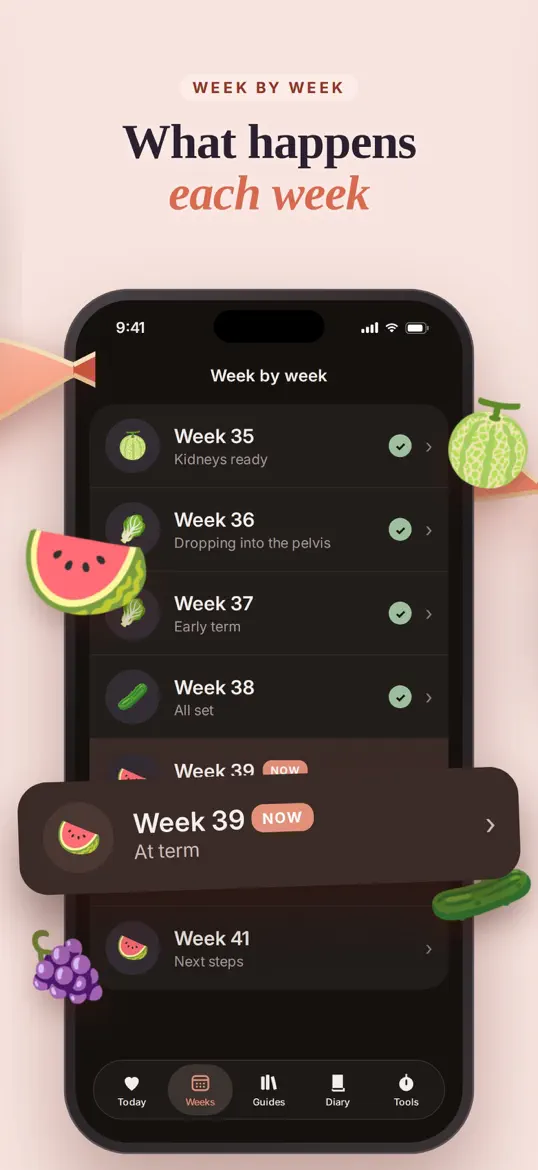
If you see an illustration for week 20, remember that it's designed to explain a stage and doesn't represent your baby's anatomy. If the app shows an appointment or test, confirm whether it's applicable to your country and circumstances. For multiple pregnancies, medical history, or other situations, the plan is often different.
The App Store listing indicates that Latido offers general content based on ACOG, NHS, WHO, and SEGO guidelines and is not a medical device. The visual information can simplify a complex process, provided it is used as a supplement to actual prenatal care.
Dates, tests, and normal variation
Your estimated due date is an estimate, not a mandatory appointment. Two people at the same gestational age can experience very different symptoms. A calendar week alone does not determine the day of a test or the interpretation of a measurement. Write down the date set by your team, the schedule of appointments they have given you, and any subsequent changes. If an app shows you a test that isn't on your plan, ask about it instead of concluding that you're missing out on care.
Weekly illustrations often condense gradual processes into a single image. The development of structures and functions does not occur at the same instant for all pregnancies. ACOG describes stages by ranges of weeks, a more prudent way of communicating this variation. Length and weight figures published in educational materials help to visualize the scale, but monitoring individual growth requires clinical measurements and context.
Information by trimester is helpful for organizing questions: in the first trimester, date, medical history, and initial tests; in the second, physical changes and results of checkups; in the third, movements, birth, and postpartum support. This organization doesn't mean that topics can only be discussed at one stage. Ask about the birth whenever you want, and seek medical advice immediately for any worrying symptom, even if it seems early.
A week of useful reading
When opening the relevant week, first read the general idea and then identify a single question that is relevant to you. You might note, "What test are they offering me now?" or "What symptoms require a call?" If you don't have any symptoms listed, don't try to find them. If you have one that isn't listed, describe it anyway during your appointment. A general guide will never cover all possible experiences.
Sharing information with a partner or family member can facilitate conversations about specific support: who will accompany you to an appointment, what tasks you need to delegate, or how you would prefer to receive help. The accompanying person should also understand that they cannot interpret a chart or decide that a warning sign is normal. The clinical plan belongs to the pregnant person and the team caring for them.
Keep two separate types of notes: personal memories and information for your appointment. Memories can include photos or sensations; useful clinical information includes the date a symptom started, its intensity, duration, and what you were told to do. Don't copy incomplete medical results into an app to interpret them out of context. Bring official documentation to appointments and ask for explanations of any terms you don't understand.
Before the end of each trimester, review your notes with three questions: what actually changed, what interpretation did the team give you, and what do you need to prepare for the next visit? This prevents a general piece of information on a screen from replacing a clinical conversation. If you see a different gestational age in a report, ask for an explanation of the difference and update the calendar only afterward.
Frequently Asked Questions
Why do my app and my ultrasound show different weeks?
The date based on your last menstrual period is an initial estimate. Consult your healthcare provider to determine the gestational age and estimated due date you should use.
Are the fruit size comparisons exact?
No. These are illustrative comparisons; clinical measurements come from tests interpreted by professionals.
Does Latido replace prenatal appointments?
No. The illustrations, lists, and records are meant to guide you and help you prepare questions. An app does not diagnose complications or replace the examinations, tests, and decisions of your healthcare team.
What do I do if the baby's movement pattern changes?
Contact your midwife or maternity unit immediately if movements become less frequent, weaker, or stop. Don't wait until a counter reaches a certain number or until the next day.
Can the app be used without a subscription?
The App Store listing advertises free access, with Plus features available through a one-time purchase and no subscription. Check current terms and pricing in your country's app store before installing.
Sources and review date
Content reviewed on November 11, 2026. Sources: ACOG, Fetal Development; NHS, Week-by-Week Guide; Latido App Store. This information is general and does not replace individual assessment by a midwife or healthcare professional.