No contact: what it is, how long it lasts and how to maintain it
Transparency: Kintsugi is made by AppRadar, the publisher of this website.
No contact involves ceasing all communication with your ex (messages, calls, social media, and meetings) for a period you set, usually 30 to 90 days, to allow space for your recovery. There is no official duration, nor is there evidence that a specific number of days works best; however, several studies suggest that continued contact is associated with more distress and a longer-lasting attachment.
What no contact is and what it is not
It's not a punishment or a way to manipulate your ex into contacting you. It's a choice for you: to avoid situations that reopen old wounds. It's also not a medical rule. It's a strategy many people use, and research partially supports it.
This includes messages and calls, but also looking at their profiles, watching their stories, asking third parties about them, or "happening to pass by" places where you know they'll be.
What the research says
In a follow-up study of 58 young adults after a breakup, contact with the ex slowed the decline in feelings of love and sadness (Sbarra & Emery, 2005). In a study of 464 people, monitoring an ex's Facebook profile was associated with more distress, more longing, and less personal growth (Marshall, 2012). And in a 2025 study of 328 adults, the most consistent distinguishing factor for those who remained attached to their ex was maintaining frequent contact, either in person or online (Chong & Fraley, summarized by the British Psychological Society).
This should be read with caution: these are observational studies, so they don't prove that contact causes distress (it's also possible that those who are suffering the most seek more contact). Furthermore, the summary of the 2025 study itself points out that maintaining some level of contact can be positive in certain cases, for example, when children are raised together or when a friendship develops.
How long does no contact last?
The 30, 60, or 90-day timeframes are conventions. Choose an initial milestone you can realistically achieve (for example, 30 days), review your progress at the end, and decide whether to extend it. The 1, 7, 30, and 90-day milestones are for celebrating progress, not for marking a "healing" date.
If after that time you want to talk again, do it with a specific reason and at a time when you're not at your lowest.
How to maintain it: practical rules
Mute or archive their chat instead of deleting it if you can't yet. Unfollow them on social media or use the "see less" option offered by some platforms. Let one or two trusted people know you're going no contact. Turn off notifications from the apps where they used to message you and avoid routes or places you shared.
Plan what you'll do instead of writing: call someone, go for a walk, open your journal. Having a definite plan for when the urge strikes is more helpful than relying on willpower.
No contact on social media, step by step
Social media is where the no-contact rule is most often broken without us realizing it. Unfollow or mute their profile and those of their close family, turn off "People You May Know" suggestions if possible, delete or archive conversations where you used to talk, and change the background of the chat you share. If you're in the same groups, mute the group instead of leaving if leaving has a cost.
Do the same with the accounts of mutual friends who post about him or her. There's no need to break up with anyone: simply mute them for a while.
Common mistakes
Setting too long a deadline and giving up in the first week; using no contact as a strategy to get your ex to reach out (if you do it with that expectation, each day without a message will hurt more); checking "just once" if they've looked at your stories; telling yourself it's "just a friendship" when you can't yet; and treating a relapse as a total failure.
If you need a more comprehensive guide for the first month, start with how to get over a breakup.
What to do at the moment of impulse
The urge to text often strikes at night, on special occasions, or after a song. Before sending anything, wait, write the message where it can't be sent, breathe, and decide tomorrow. We explain this step by step in The urge to text your ex: what to do before sending the message.
If you relapse
Writing or replying once doesn't erase the work done. Avoid the second message, note what triggered the relapse, and reset the counter without punishing yourself. A relapse is information about situations that need a better plan, not proof that you can't handle them.
When it's not possible: children, work, or housing
If you share children, work, or a home, total no contact isn't realistic. In that case, limit communication to the bare minimum, do it in writing, use a brief and practical tone, and avoid talking about the relationship. You can reserve a single channel and time for these matters.
If there is violence, harassment or fear
If the relationship involved violence, threats, or control, no contact is not just an emotional strategy, and it's advisable to consult with specialized services before deciding how to cut off contact. In Spain, you can call 016 (information and advice on violence against women, free, 24 hours a day) or 112 if there is immediate danger; in other countries, look for the local service. If you are thinking of harming yourself, call 024 (suicide prevention hotline in Spain, free and available 24 hours a day) or 112; in other countries, look for the local service at findahelpline.com.
How an app can help
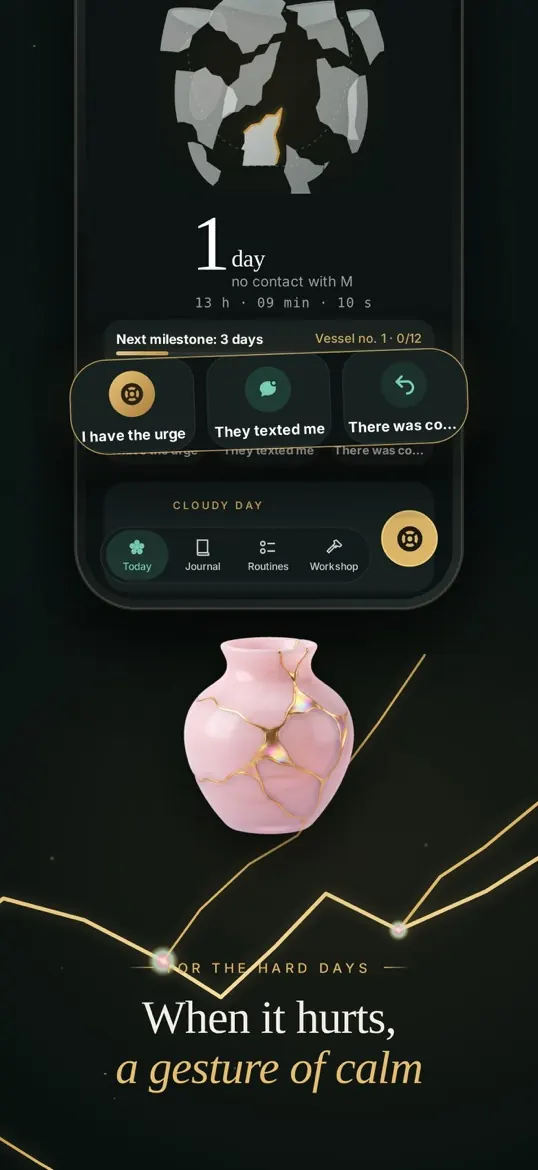
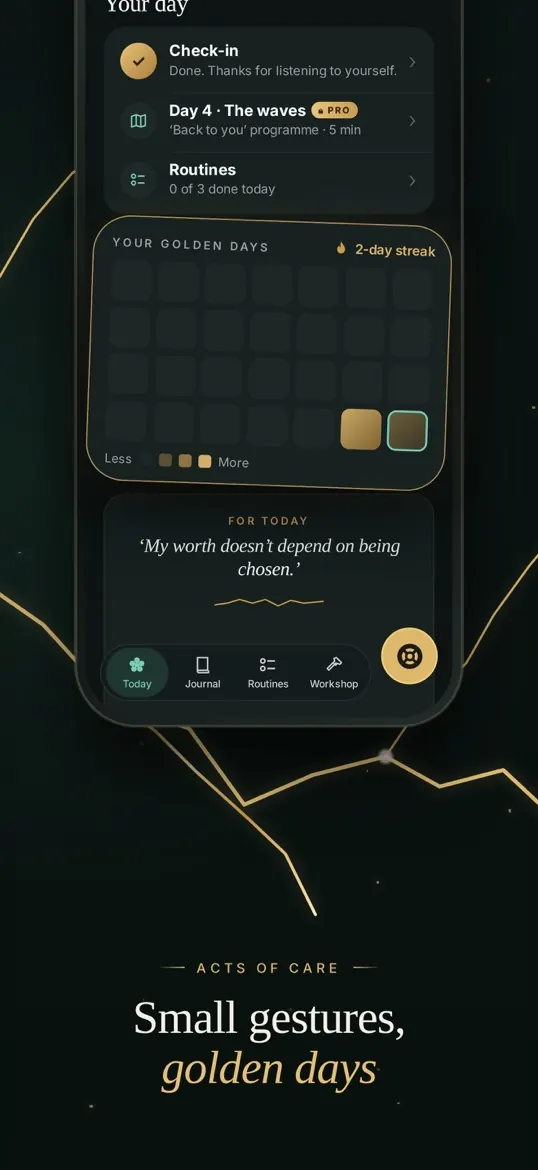
A milestone counter makes progress visible, and a help button for those moments of impulsiveness reduces improvisation. Kintsugi for iPhone and Kintsugi for Android include a no-contact counter, an Anchor for writing urges, and "guilt-free" relapses (AppRadar, the publisher of this site, develops Kintsugi). You can compare it with others in our ranking of apps for getting over a breakup.
Frequently Asked Questions
How many days does no contact last?
It's common to aim for between 30 and 90 days, but there's no proven duration. Start with a period you can stick to and monitor your progress.
Does no contact work?
There are studies that associate continued contact with more distress and attachment, but they don't prove that cutting it off is the cause of recovery. It's a reasonable strategy for many people, not a guarantee.
What do I do if my ex texts me?
You are not obligated to reply. If you decide to answer, keep it brief and avoid starting arguments. There are examples in the guide about the urge to text and what to do when your ex texts you.
Do I have to block them?
Not necessarily. Blocking is useful if you don't trust your instincts or if they message you persistently; muting or archiving is a less drastic option. If it's harassment, block and save the evidence.
What if we have children?
Limit contact to matters related to the children, in writing, and in a practical tone. When important decisions need to be made, do so when you are calm.
Sources and revision date
Content reviewed November 12, 2026. Sources: Sbarra and Emery (2005), Personal Relationships; Marshall (2012), Cyberpsychology, Behavior, and Social Networking; British Psychological Society, Research Digest (2025); Ministry of Health, line 024. The information is general and does not replace the assessment of a healthcare professional.