How to potty train without pressure: readiness, first days and accidents
Transparency: Adiós Pañal is made by AppRadar, the publisher of this website.

Adiós PañalPotty Training
How to potty train without pressure starts with observing the signs of readiness, offering the potty, and supporting attempts without punishment. There is no single age or timeframe that applies to all children; accidents are part of the learning process.
Before you begin: look at the child and the context
Ask yourself what has changed in their life. A move, starting preschool, the arrival of a sibling, or an illness can make it harder to maintain a new routine. Choose a time when the person accompanying them can respond calmly. There's no need to wait for a perfect vacation, but it's important to avoid making potty training another source of tension. Agree as adults on what words to use, where the potty will be, and what to do if there's an accident.
Prepare easy-to-use clothing, changes of clothes, and an accessible place. Show the child where to wash their hands and offer them the opportunity to try without expecting immediate results. If they ask on their own, acknowledge their initiative. If they refuse, let the moment pass and offer it again later. A caregiver who knows what you'll be doing can help ensure consistency. The initial goal is familiarity and trust, not counting successes on a chart.
First days: a routine that fits into real life
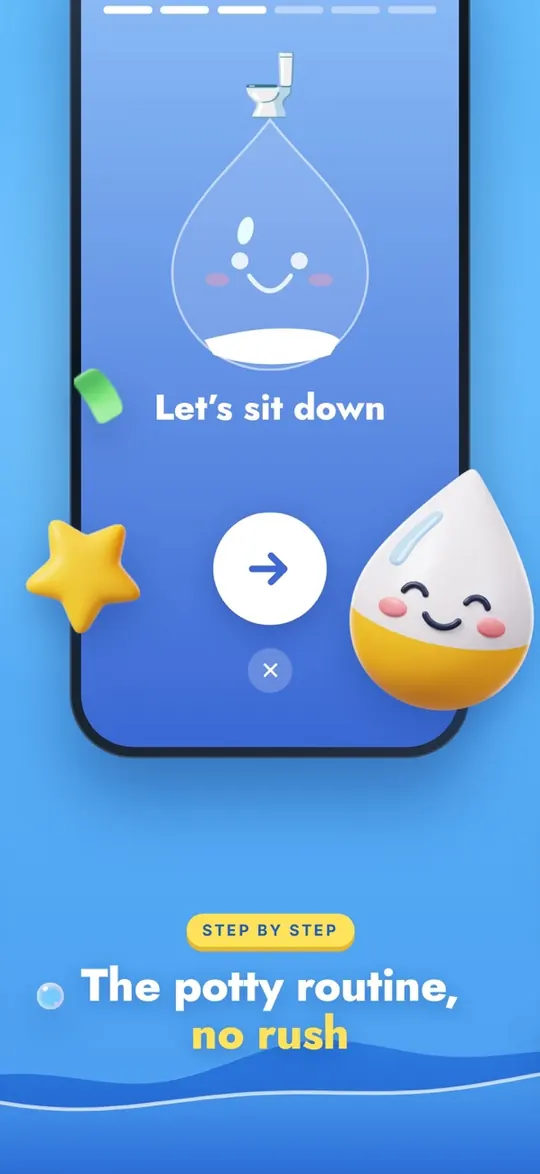
Offer the potty upon waking, after some meals, or before leaving if the child is receptive. These are opportunities related to routine transitions, not an obligation every few minutes. Keep each invitation brief and allow the child to get up if they don't want to continue. Talking about bodily sensations in simple words helps connect the need with the action. If one day there are only attempts without urination, practice is still part of toilet training.

Adiós Pañal proposes a seven-day preparation phase and a fourteen-day gradual phase. Use these as an editable framework, not as a graduation date. Droplet shows a reminder based on the log; see if it matches your schedule and adjust accordingly. The child shouldn't feel that a screen is making decisions over their body. If they are tired or sick one morning, a less intense routine might be more appropriate. Consistency means returning to gentle support, not insisting at all costs.
How to respond to accidents
When the accident happens, explain what occurred in a neutral way, help the child change, and continue. Don't remove a sticker or compare the child to another. If the child wants to help with laundry, this can be a regular part of their care, never a punishment. Observe whether the accident happened during absorbing play, after a long wait, or in a new environment. This information will help you decide whether to offer the potty before that situation.
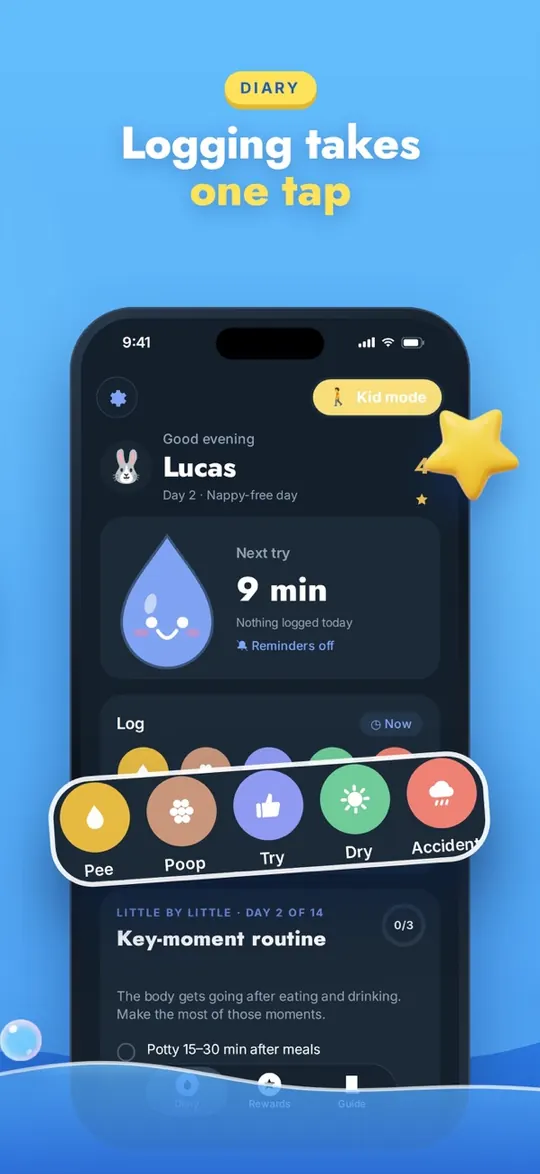
The app listing describes logging accidents, potty attempts and dry checks; avoid turning every entry into a judgement. The school may record this differently than home. After several days, look for general trends and talk to caregivers without assigning blame. If discomfort, sudden changes, or very frequent accidents appear that concern you, consult your paediatrician. A record can guide the conversation, but it cannot, on its own, diagnose a physical or emotional cause.
Signals matter more than a date
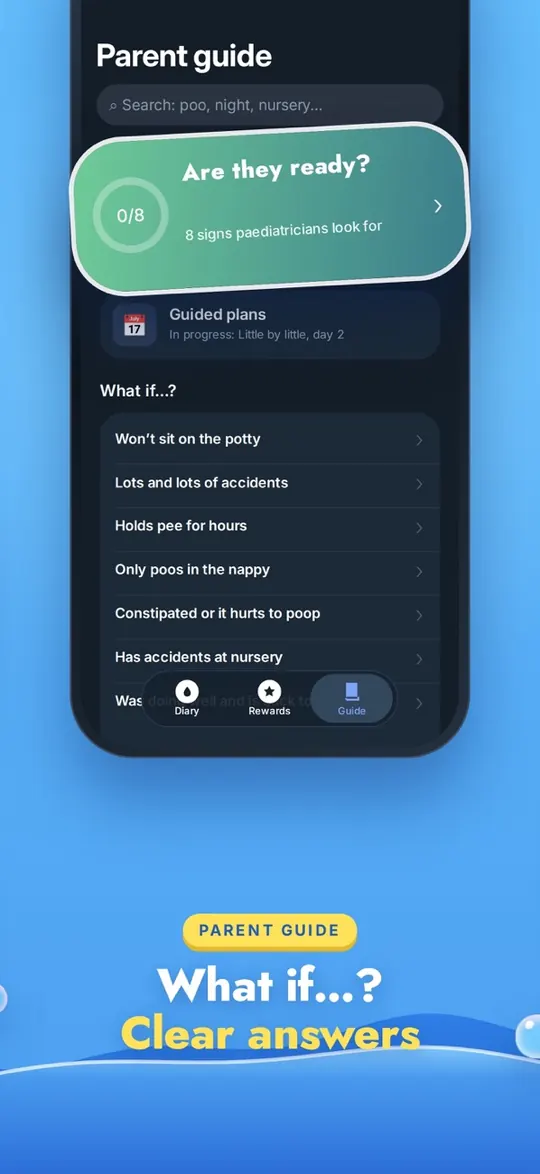
The decision to start potty training doesn't depend on your child turning exactly two or three years old. Observe whether your child notices wetness or the need to urinate or defecate, shows curiosity about the bathroom, can participate in lowering their clothes, and is willing to sit for a few moments without distress. Some signs appear earlier than others, and it's not a test that should be passed in a day. The American Academy of Pediatrics describes readiness as a combination of physical development, understanding, and emotional readiness. Talk to your paediatrician if you have any particular needs or concerns about your child's development.
The Spanish Association of Pediatrics explains that toilet training is usually established around two to three years of age, with individual variation. This age is a general guideline, not a strict deadline. Using simple words, showing the child where the potty is, and allowing them to observe the routine can precede any potty training. If the child responds with strong resistance, returning to a familiarization phase may be more helpful than increasing the frequency of reminders. Technology does not create a physical skill that is still developing.
Accidents, rewards and respect
An accident provides information about the moment, the context, and the available clothing. It's not a moral failing. Clean up calmly, offer a change of clothes, and continue with the routine without taking away rewards already earned. The Adiós Pañal app listing explicitly states that accidents don't deduct stars and that every attempt counts. Their system offers experience rewards chosen by the family, such as selecting a storybook or going to the park. This choice allows them to celebrate the effort without turning toilet learning into a competition for objects.
HealthyChildren, from the American Academy of Pediatrics, explains that daytime accidents can continue for months even after apparent progress. If they are very frequent, do not decrease, or are accompanied by discomfort, it is advisable to consult a paediatrician. Do not force the child to sit for long periods or punish them for wet clothes. Ask if they want to try, offer help, and pay attention to their response. A chart may show patterns, but a graph does not define a child's worth or replace observing how they feel.
From pee to poop and from day to night
Just because urination is progressing doesn't mean bowel movements have to follow at the same time. The child may prefer privacy, a different position, or a nappy for defecation. Listen if they say it hurts and monitor for constipation with professional help. Don't force them to sit or withhold toilet time as a reward. A stable potty and footrest can make the position more comfortable, depending on the family's needs.
Nighttime dryness has its own rhythm. Don't let a wet bed be a reason to undo all the daytime training. Protect the mattress, prepare bedding, and ask your paediatrician if you have any symptoms or concerns. The dry nights plan appears as a Plus feature on the listing; the name doesn't imply that an app can accelerate the development of nighttime continence. Each stage can be approached with different expectations and without promising a specific date.
Coordinating nursery and family
Tell grandparents, daycare, and other caregivers what words the child knows, when they usually accept potty training, and where the spare nappies are. Ask them to tell you if the child shows discomfort, withholds stool, or prefers a different potty. The caregiver card advertised by Adiós Pañal can summarize this information, but check what personal data it includes before sending it. It's not necessary to share every record with everyone.
Consistency doesn't require every home to operate identically. At school, there might be group schedules, while at home there's more time to respond to individual cues. Agree on a common foundation: offer the potty without forcing, report accidents neutrally, and don't take away rewards. If a caregiver observes something you don't see at home, listen before changing your entire strategy. Learning happens in various contexts and requires communication, not constant supervision.
Poop, constipation and consultation
Learning to pee and learning to poop don't always progress at the same pace. Some children ask for a nappy to poop, become tense, or try to hold it in. Pain and constipation can complicate the experience; an app that alerts more often won't solve the problem. Consult your paediatrician if there is pain, hard stools, retention, blood, persistent discomfort, or concern about bowel habits. Describe what is happening and when it started, rather than trying to impose a deadline.
The AAP notes that constipation can occur during this stage and recommends individualized guidance for its treatment. Specific advice on continuing, pausing, or modifying training depends on the symptoms and a professional assessment; it should not be reduced to a one-size-fits-all rule found online. If you keep a record of urination, defecation, and attempts, you can show a helpful summary during a consultation. Adiós Pañal advertises a PDF report for the paediatrician within Plus, but the report does not provide a diagnosis.
What the app does and what it doesn't promise
The App Store listing presents Adiós Pañal as a tool to help track pee, poop, attempts, dry moments, and accidents with a single tap. It describes reminders that count again after each pee and adjust to the recorded rate, seven-day preparation and fourteen-day gradual plans, a kid mode with large buttons, stories and stickers, and a caregiver card. Check the exact availability of each feature and its language in your app store. The Android download link is provided, but the features listed here are from the iOS listing.
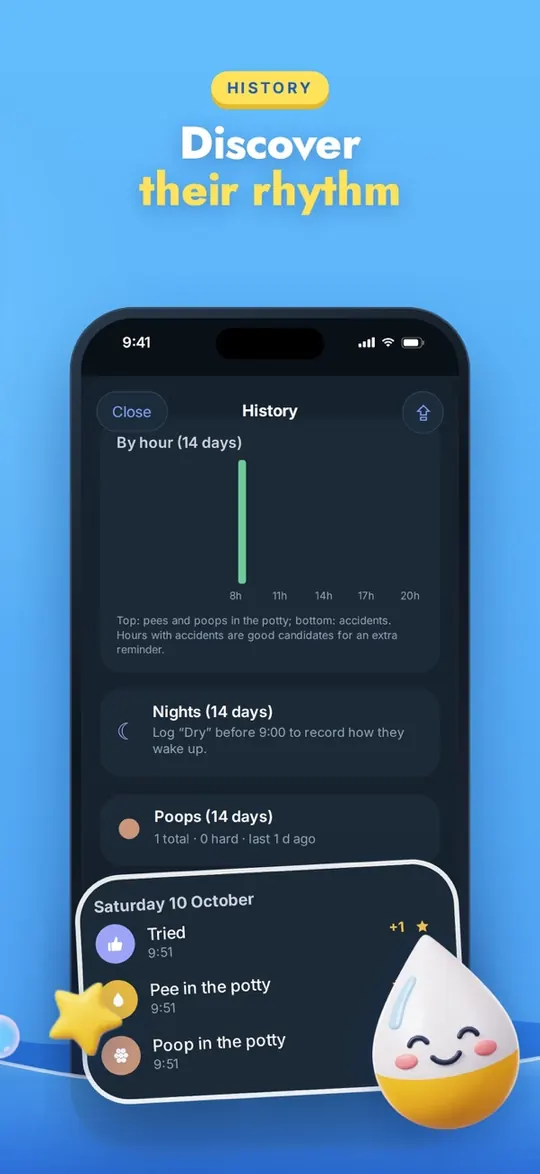
An app cannot tell if a child is ready just by the time between two check-ins. Entries may be incomplete when caring for others, during an outing, or at night. Use the reminder suggestion as a flexible prompt, not as an order to sit down a resisting child. If the schedule changes due to illness, vacation, or school, adjust the plan. The goal is to help the family share a consistent routine while the child becomes more independent at their own pace.
Privacy, access and paid version
The iOS listing states that no account is needed, no ads are displayed, and data is stored on the device. Apple clarifies that the privacy information is declared by the developer and is not independently verified. Avoid sharing screenshots with the child's name, schedules, and other data on public networks. If you change phones, check beforehand how the history is stored. The caregiver card can be helpful, but only share what is necessary with the people involved.
Adiós Pañal is a free download with in-app purchases. The listing describes Plus as a one-time payment, without a subscription, that adds the three-day intensive plan, the dry nights plan, more comprehensive guides and reports, multiple siblings, and additional content. Don't interpret "three-day plan" as a promise to eliminate nappies within that timeframe. Prices and content may vary by store and date. Before paying, try the basic tools and decide if the expanded material meets a real need for your family.
Frequently Asked Questions
At what age do children stop using nappies?
There is no single date; observe preparation and ask if you have any questions.
What should I do after an accident?
Change calmly and continue, without punishments or withdrawing rewards.
Does the 14-day plan guarantee results?
No; it's a support structure, not a maturation period.
Should daytime and nighttime nappies be removed at the same time?
Not necessarily: the rhythms may differ.
When to consult?
For pain, constipation, retention, persistent symptoms, or accidents that cause concern.
Sources and criteria
App features according to the official Adiós Pañal listing on the App Store. For development and preparation, consult the Spanish Association of Pediatrics and the American Academy of Pediatrics. Regarding accidents and constipation, the HealthyChildren guides offer general guidance. Check dates, conditions, and language for each listing; this guide is not a substitute for a paediatric evaluation.