Brain Games Routine: A Short Plan for the Whole Family
Transparency: Brain Games is made by AppRadar, the publisher of this website.
A brain game routine means setting aside short, flexible moments for challenges that interest you. There is no validated daily dose of minutes for this app, nor a marker that demonstrates overall cognitive improvement.
What a routine can achieve
A routine of brain games can help you set aside some enjoyable time to solve challenges and learn facts. There's no universal duration that guarantees improved intelligence, improved memory, or prevention of dementia. The idea is to practice specific tasks, understand your preferences, and combine screen time with movement, rest, and social interaction. The Brain Games guide suggests short sessions and a plan tailored to areas you've practiced less.
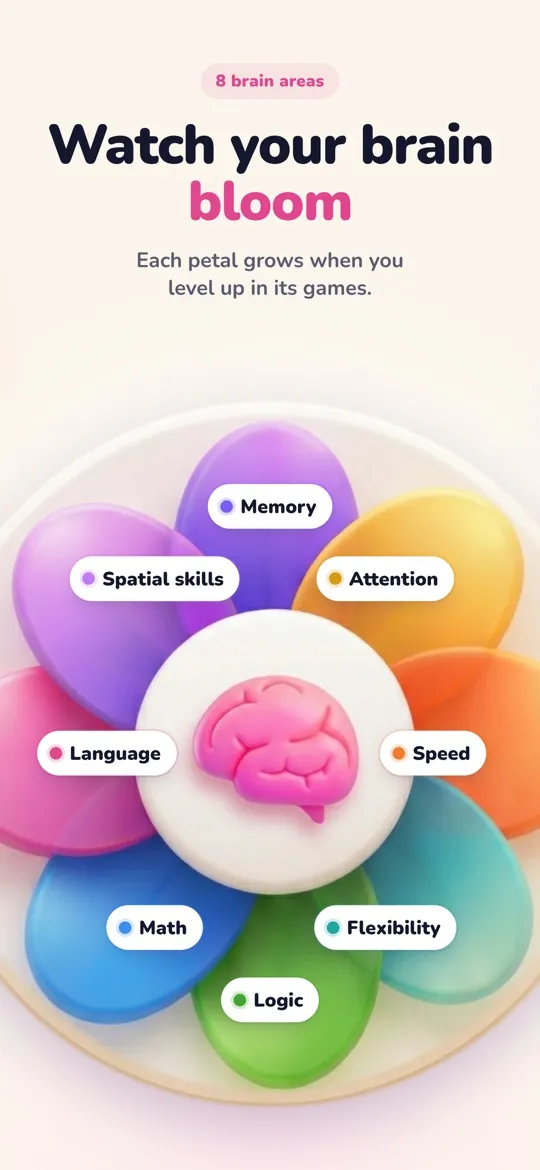
The app lists eight areas and 75 games; a screenshot shows a daily selection focusing on speed, language, memory, calculation, and logic. This distribution prevents you from always playing the same games from the catalog, but it's not a clinical prescription. If you prefer two games today and a conversation tomorrow, the routine can be flexible.
The NIA distinguishes between training studied in trials and commercial apps: there is insufficient evidence to attribute the same effects to them. This guide proposes structured leisure, not treatment. An internal score may reflect learning rules, practice, and familiarity with a game.
First step: choose an honest goal
A useful goal might be "I want to explore a new game twice this week" or "I want to memorize five English words and use them in sentences." Avoid vague goals like "increase my brainpower by 30%." The first is verifiable; the second lacks a clear measurement and turns any number on the interface into a promise.
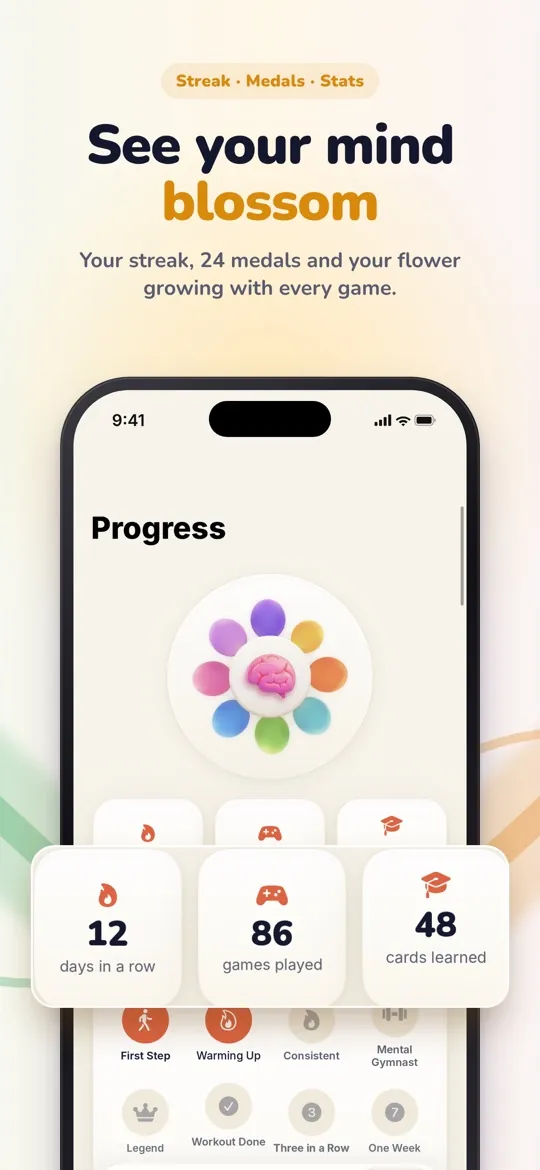
If you use the eight-petaled flower, interpret it as a map of activity in the app. A growing petal shows levels achieved in its area, not physical brain growth. Medals and streaks can make a habit visible, but they shouldn't determine whether you've had a good day.
Note your reason for playing: to pass the time, share a game, practice math, or learn capitals. This will help you choose appropriate games and skip others that don't benefit you. The age and player profiles listed on the page help differentiate playing styles, not compare abilities between family members.
An example of three sessions
In the first part, try a visual memory game and a logic game. Read the rules and observe what strategy you use. If you make a mistake, change one thing instead of starting over without thinking. You can end with a card on a topic that interests you. The session ends when it stops being enjoyable, even if you haven't completed a whole plan.
In the second, choose either attention or speed and a language challenge. Speed may depend on familiarity with the mobile device and motor skills, so don't compare times between ages or devices. If you're playing with a child, avoid a timer that might frustrate them and talk about how they solved the problem.
In the third step, revisit a previous task to check your understanding of the rules, and then add a game from a different area. Afterward, try explaining something you learned off-screen. Alternating between tasks allows for variety without confusing improved gameplay with an overall improvement in memory or attention.
How to use the app's plan
The "Today's Training" screen selects under-practiced areas and lets you mark completed games. Cerebro Pro expands the formats to three, five, or seven games, depending on the product; the free version allows you to continue practicing and progressing daily with a three-game plan. Choose the number that fits your schedule and review the store's terms and conditions before paying.
A level that goes up or down adjusts the difficulty of the game. If a task becomes too demanding, lowering the level is not a judgment on the person. If it becomes repetitive, try another area. The adaptive function organizes challenges; it doesn't know your health conditions, educational goals, or mood.
If there are multiple users, each can have a profile. The information sheet states that words, times, and initial level are adjusted according to age. An adult should supervise children's use and set limits. For older users who don't use phones much, dedicate the first session to familiarizing themselves with gestures and reading the screen; this learning curve affects the score.
Learning outside of games
The decks section offers questions about flags, capitals, English, tables, history, and science. Choose one and review a few cards. Try to say the answer before seeing it and check for mistakes. Then relate the information to a map, a sentence, or a conversation. This distinguishes between recalling a card and using knowledge.
Spaced repetition organizes reviews, but it doesn't erase forgetting. If a card is repeated many times without being understood, simplify the question or look for context. Don't add hundreds of pieces of information just to keep a streak going. The best study list is the one you can stick to without neglecting sleep, physical activity, or social connections.
The app also mentions brief memory techniques. Try one with a small set of data and see if you find it useful. Not all techniques work equally well for all tasks. A calendar, a note, or a reminder might be better for actual obligations; there's no merit in remembering everything without aids.
When to stop or ask for other help
If games cause you stress, reduce the frequency or change activities. A leisure app should be easy to put down without guilt. If a child is only interested in winning medals, talk about the challenge and allow screen-free play. If an elderly person prefers a walk or a game of cards, respect that choice.
If you notice new changes in memory or attention that affect your daily life, consult a professional. No streak, level, or score can diagnose or rule out a problem. Bring concrete examples of situations and their evolution instead of relying on an app graph.
A more sustainable routine leaves room for other activities that matter. The NIA reminds us that maintaining movement and participation in meaningful activities is part of a broader perspective on cognitive health. Games can be one option within that perspective, without any medical guarantee.
Example of an adaptable week
Monday: Learn the rules of a memory game and write down a strategy. Wednesday: Play a logic game and retrieve two pieces of information from the deck without looking. Friday: Repeat a game to see if you've become more familiar with it and discuss a piece of information you learned with someone. The weekend can be left free for other interests. This schedule is an example of leisure activities, not a medical guideline.
If you enjoy playing daily, keep your sessions flexible; if you only have two sessions, that works too. The app may suggest less-practiced areas, but you can choose based on your energy and curiosity. When a task feels tedious, switching to something else can keep you interested. You don't need to "make up" for a lost streak.
A family experience can include a game played in turns. Each person explains how they solved the challenge, without comparing scores between ages. Around a table, you can also play games like remembering objects or solving riddles. The screen is one option among several, not the mandatory center of a routine.
What to register and what to ignore
Only record data that helps you decide: which game you liked, which rule you didn't understand, or which word you want to use again. Medals can be fun, but they are not indicators of health. The flower shows practiced areas and internal levels; it does not represent a brain scan or a diagnosis.
If you perform worse one day, consider rest, distractions, and familiarity with the game before drawing conclusions. If you notice persistent changes in daily activities, seek professional help. Don't try to test for or rule out a problem by repeating a level until you achieve a reassuring score.
If you use games in more than one language, make sure you understand the rules and vocabulary of each challenge. A verbal exercise can be difficult because of the language, not because of a lack of attention. Switch to another activity or ask for help understanding it. A useful routine recognizes limits, interests, and personal circumstances; it never needs a grand promise to justify a few minutes of play.
To conclude
A session can be shorter than planned and still be satisfying. Choosing when to stop is also part of a sustainable routine.
Frequently Asked Questions
How many minutes a day should I play?
There is no proven therapeutic dose for this app. Choose short sessions that you enjoy and that don't replace other activities.
Do we have to play every day?
No. A streak is an indicator of usage, not a health requirement.
What do I do if my level drops?
The difficulty is adjusted within the app; a single game does not diagnose cognitive changes.
Can I share the phone?
The listing advertises separate profiles and age-based customization; check the features available in your plan.
Does the daily plan improve my overall memory?
You can improve practiced tasks, but no overall improvement attributable to this app has been demonstrated.
Sources
Reviewed November 12, 2026. App Store Spain; NIA, Cognitive Health; Review of Commercial Programs. Commercial features are from store listings; scientific conclusions are not the result of an evaluation of this app.