Letter and syllable games to learn to read while playing
Transparency: Letruga is made by AppRadar, the publisher of this website.
Playing with a small goal
A reading game works best when you know what skill it's developing. Finding a rhyme isn't the same as recognizing a letter; tracing a shape isn't the same as reading a word. Choose one goal per session and see if the child can apply what they've learned in a new situation. Don't mistake initial excitement, points, or enthusiasm for reading mastery.
The EEF emphasizes the explicit and systematic teaching of correspondences between sounds and graphemes. Play can provide opportunities to apply this teaching. Adult involvement offers an explanation when the response is incorrect and a connection to a book or real conversation. Keep the duration of the activity so that the child wants to come back.
1. The hunt for the initial sound
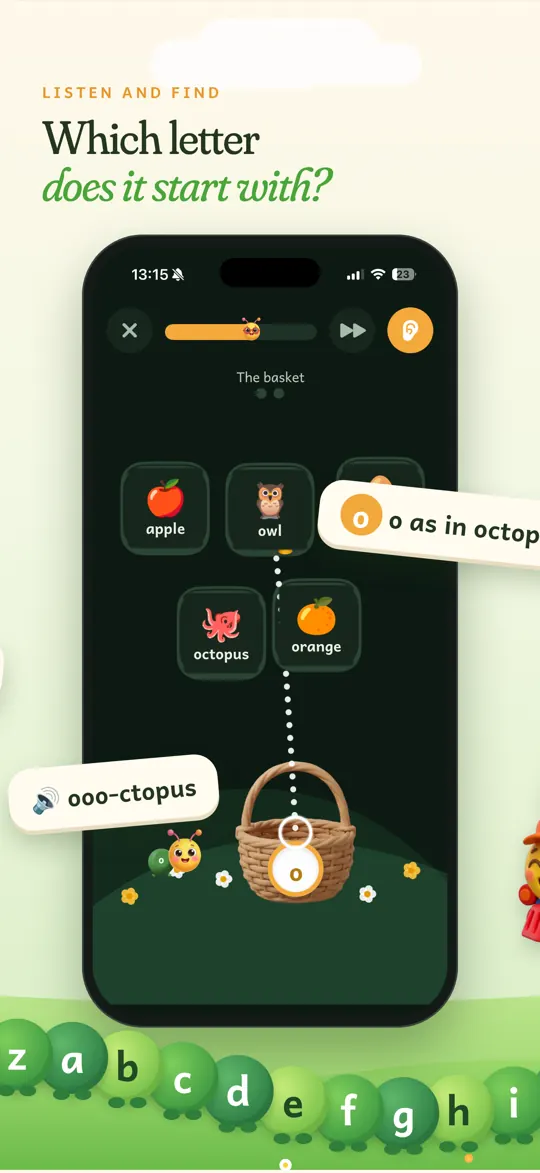
Choose a familiar sound and look for objects that begin with it. Pronounce the words slowly and ask what they hear at first. Then show the corresponding letter and ask them to find it in a written word. Don't turn the game into an endless list or introduce a new sound without explanation.
To add difficulty, mix in an object whose name doesn't begin the same way and ask the child to explain why they discard it. Change the pictures to check that they recognise the sound and don't memorise the position. Letruga advertises presenting each letter with its sound and a picture; you can adapt that idea to the home environment.
2. Clapping and Rhymes
Say the names of family members or objects and separate the syllables by clapping. Then look for rhyming words, even if they are funny or made up. These games direct attention to speech structure. Not all children master them at the same time: model several times and use clear words.
Awareness of syllables and rhymes can be developed without a screen. When you open a digital activity, make sure the child is listening to the word and not guessing it based solely on the illustration. Letruga's Spanish listing mentions clapping and rhymes to train the ear. Supplement this practice by talking about the words and their meanings.
3. Build a syllable and change a letter
Using paper cards, one consonant and several vowels, form syllables the child has already worked on. Ask them to read them while you change one card. The change helps them see that the spelling modifies the sound. Avoid always giving them the answer before they try to put them together.
Then write a simple word using only letters the child knows. If they cannot read it, return to two syllables and demonstrate how to blend them. According to its listing, the app includes exercises for combining letters and vowels to form words. Transferring the activity to paper cards lets you check whether the skill works outside an animation.
4. Trace and say the sound
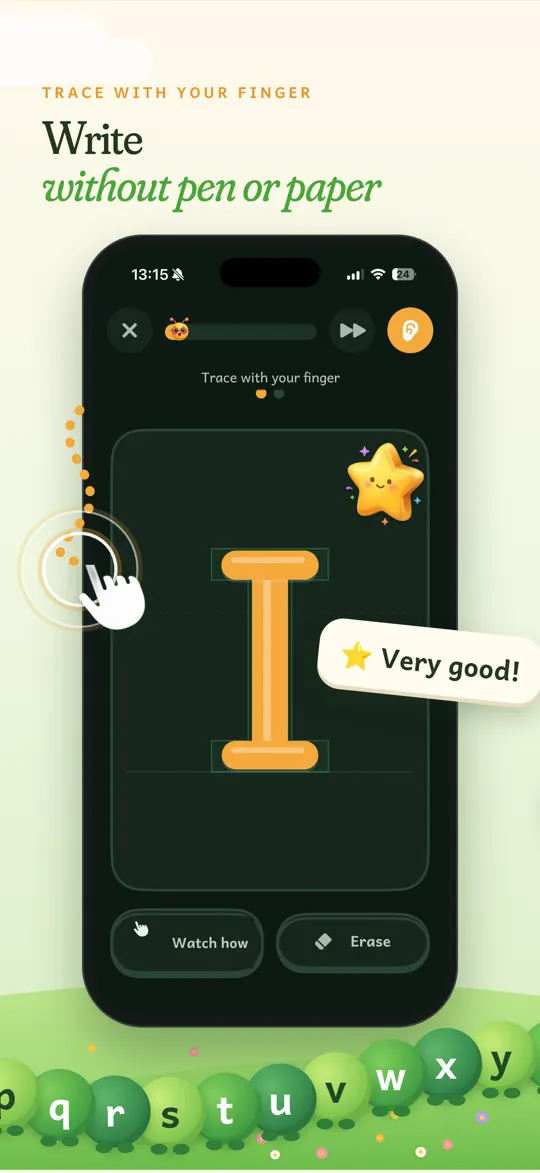
When tracing a letter, pronounce the sound and observe the path. Tracing helps with familiarity with its shape, but it doesn't replace reading. Alternate between finger, pencil, and movable letters according to the child's age and needs. If the school uses cursive or capital letters, ask which is appropriate to practice now.
Letruga advertises tracing with stroke direction and a choice of print, capitals or cursive. This configuration can facilitate consistency with the classroom. Do not correct a stroke repeatedly if the task is frustrating; a brief demonstration and another opportunity later are usually more useful than an exhausting session.
5. From drawing to sentence
Write a short sentence using decipherable words and let the child read it before revealing a picture. Ask what the sentence means and what might happen next. If they need help with a word, point out familiar sounds. Using the picture to check meaning is different from guessing the entire sentence from the image.
The Spanish app listing includes "read and choose the picture" and sentence ordering. Extend the game beyond the screen: cut out words, change the order, and ask what new idea the sentence expresses. This introduces language, punctuation, and comprehension without turning the activity into a formal exam.
6. A shared story after the game
Finish with a read-aloud from a book the child has chosen. They can read a familiar word while you read the rest. Talk about the character and a new word. Decodable texts help children practise reading independently; shared stories provide vocabulary and enjoyment.
If you use Letruga, an adult can check which letters are difficult and select a short practice exercise. A profile, streak, or sticker shouldn't become a competition between siblings. The app listing advertises up to four children and a time limit; set up each profile with its own starting point. The best ending is when the child wants to return to a story, not when they've accumulated more minutes.
A game box without a screen
Prepare cards with familiar letters and small objects. One bag contains things that begin with a sound; another, objects that rhyme. Take one out, say its name, and ask the child to explain why it belongs in that bag. Then find the corresponding spelling on a label. This step connects listening, speaking, and reading without requiring an app.
Cut out syllables from paper and let them form a possible word with two pieces. Read it together and see if it means anything. An invented word can be useful for observing the combination of sounds, but clarify that it doesn't designate a real object. With sentences, try changing the order of two cards and discuss how the meaning changes. This conversation prevents the task from becoming simply arranging pieces.
To practice comprehension, read a story and stop before the ending. Ask for a prediction and listen to the explanation. Then find a word the child can already read. They don't need to decipher the entire book. Alternating moments of participation and adult reading protects the pleasure of listening to longer stories before they can read them independently.
Adaptations for different rhythms
If the child cannot yet distinguish initial sounds, use a few very different words and model the response. If they already recognise them, introduce two similar-sounding words to refine their listening skills. If they can read syllables but get lost in sentences, reduce the length and leave spaces between words. The difficulty should increase when a sign of comprehension appears, not when a counter reaches zero.
If the child wants to repeat a game, use that familiarity while changing one word or the order of the cards. If they always avoid the same letter, observe where they struggle: listening, recognising the shape, tracing or blending. These tasks need different support. Letruga’s progress dashboard can guide your observations, while a discussion with the teacher provides context about classroom teaching.
With multiple siblings, create separate profiles and avoid public comparisons. An activity might be suitable for one and too easy or difficult for another. The time limits advertised in the app allow you to agree on when to stop, but they don't replace adult supervision at the beginning. A young child often learns more when someone asks them what they've read than when they accumulate minutes of silent use.
A final check before moving forward
You can prepare a week with a different game each day in just a few minutes: listen on Monday, form syllables on Tuesday, trace on Wednesday, read a sentence on Thursday, and share a story on Friday. Repeat activities that work instead of always looking for new ones. See if they can apply a skill in another context and adjust the difficulty. Saturday doesn't have to be a game: a conversation about a book read together also develops language. If the app becomes the only opportunity to read, add an everyday moment with paper, posters, or stories. Games are useful for learning when they connect with life outside the screen. If an activity ends in frustration, leave an easy word to conclude with a successful experience and come back another day.
Frequently Asked Questions
What game is good to start with?
Hunting for the initial sound with two or three familiar objects is easy; then, match the sound with its letter.
Does learning to trace letters mean knowing how to read?
No. Tracing practices form; reading requires relating graphemes to sounds, combining them, and understanding.
What should I do if my child gets the answer from the picture?
Hide the image, ask them to read the word, and then show it to check the meaning.
How many games should I play per day?
Keep games few and brief, according to the child’s interest. Alternate digital play with conversation, paper activities and stories.
Is a daily streak a useful measure of progress?
The streak indicates days of use, not reading proficiency. Observe if they can read new words and explain what they understood.
Sources and review
Revised November 11, 2026. Sources: EEF, Phonetics; EEF, Early Reading; Letruga Spain. The practical recommendations are editorial. Features, prices and languages may change: check your store listing before paying.