English phonics for kids: sounds, blending and stories
Transparency: Letruga is made by AppRadar, the publisher of this website.
Why English requires a different approach
A translated interface does not transform a Spanish course into an English reading course. The correspondences between letters and sounds change, and in English the same grapheme can be pronounced differently depending on the word. Therefore, it is advisable to choose materials designed for the language the child is learning, especially if that is the language of instruction.
The US listing for Letruga presents a synthetic phonics sequence inspired by Letters and Sounds: it begins with s, a, t, p, continues with other letters, and progresses to combinations such as sh, ch, th, ng, and vowel groups like ai, ee, igh, and oa. There are 46 stops in eight worlds. The Spanish listing presents 35 stops in seven worlds and a different phono-syllabic progression. Their figures and examples should not be mixed up.
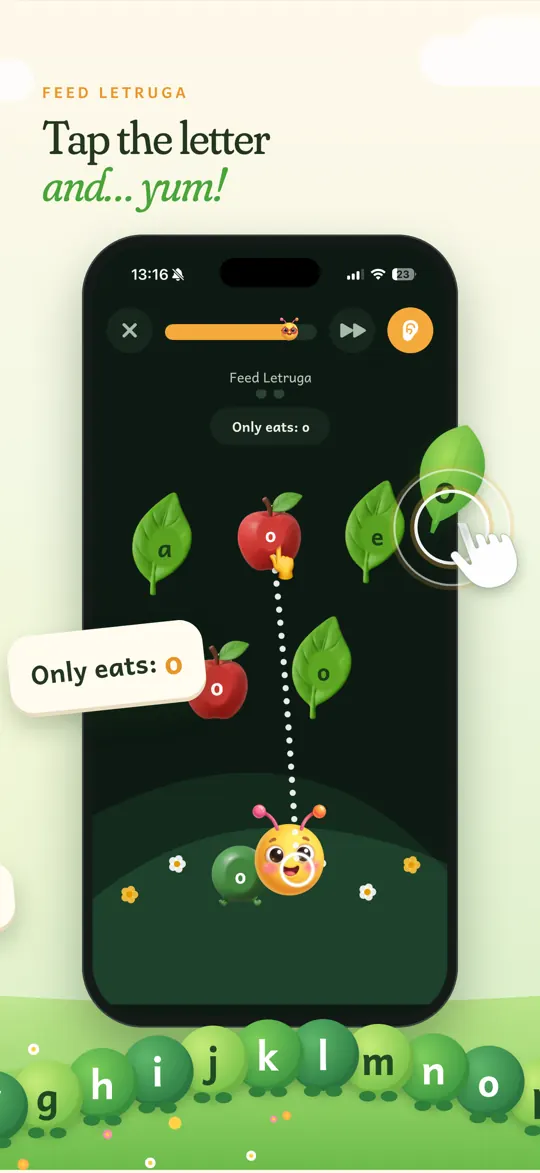
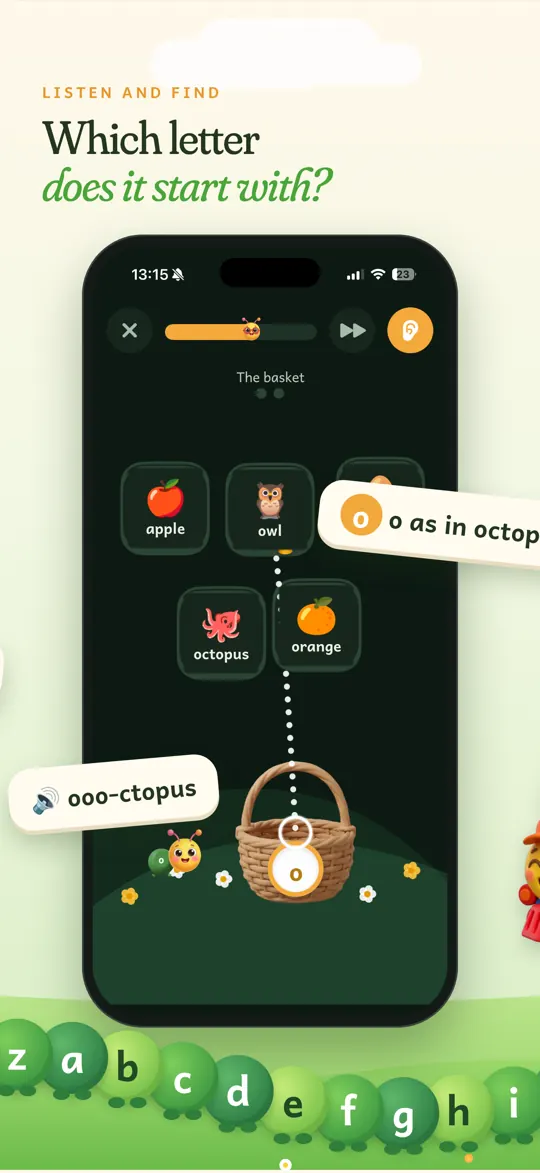
Listen to the sound and combine it
In phonics, the child learns a correspondence, identifies sounds in a word, and blends them to read it. An initial practice might involve listening to /s/, /a/, and /t/ and combining them to say "sat." The examples should have natural pronunciation in the English being taught. Avoid pronouncing letter names instead of sounds when the exercise calls for blending.
The English app listing describes sound buttons, word-building tiles, and rhyming games. These are tools for practicing a skill, not a substitute for listening to someone read with expression. Ask the child to say the full word and explain what it means; reading correctly without understanding the vocabulary leaves unfinished work.
Irregular words gradually
The English description mentions frequent words such as the, to, and was, introduced one at a time. These words may contain correspondences that have not yet been taught or irregular parts in the initial stage. The adult can point out what can already be deciphered and explain the part that requires special attention, instead of asking the child to guess the entire word from its shape.
Don't rush through a word list just to level up. Useful repetitions appear in meaningful sentences and on different days. If a child knows the word on a flashcard but not in a sentence, read it again in context. Comprehension and fluency are built with appropriate practice, not just isolated recognition.
Decodable stories and comprehension
The English listing explains that its stories unfold as the child learns sounds and include a comprehension question. A tailored story allows the child to try new sound pairings without constantly encountering untaught sounds. Afterward, talk together about the characters, actions and ending. The final question should not be the only comprehension exercise.
The EEF recommends combining decoding and language development. If the child is learning English as an additional language, they may need vocabulary support even if they read the sounds correctly. Point to objects, act out actions and relate an idea to something they know in their home language. Continuing shared stories in that language can also enrich conversation; there is no need to abandon the home language.
Choose between Letruga and another English app
Teach Your Monster to Read also states that it supports English phonics teaching sequences. According to its listing, Letruga adds tracing, family progress tracking, printable worksheets, time controls and profiles for up to four children. Compare the sequence used at the child’s school and ask the teacher which sounds to reinforce. We do not claim that an app produces better results without a comparative study.
The English version of Letruga is a free download with an initial selection and advertises a subscription or full course. Trial terms, pricing, and availability vary by region. The App Store listing states that it does not collect data; please check the current policy and device settings. According to the listing, purchases and links sit behind a parental gate; an adult should still supervise purchases.
A brief and observable practice
Choose a sound that has already been presented, let the child identify it in two words, and read a new word with that sound. Then share a storybook page and ask what happened. If they need help, model the sound and return to an easier combination. Don't use the daily streak to pressure them.
Letruga's English course can serve as supplementary practice when its sequence matches the one used at school. The goal of a session is not to "finish a world," but to recognise a letter-sound relationship and apply it in another context. If there are persistent difficulties with the language of instruction, speak with the teacher to specify what needs reinforcement.
If English is a second language
First, ask which variant and sequence the school uses. A child may know the meaning of a word in Spanish but not in English, or vice versa. When reading "sat" or "ship," don't just focus on the pronunciation: show the object, act out an action, or put the word in a comprehensible sentence. The goal is to connect the new written code with spoken language.
Don't literally translate a Spanish rhyming activity and assume it works in English. Sounds, stress, and spelling work differently. The very difference between Letruga's 35 Spanish and 46 English learning stages illustrates why a course designed for the language is necessary. If your device allows you to change the language, check the active course before practicing.
Some families prefer to speak in their native language while their child learns written English in class. This can foster rich conversations and shared reading. If you're not fluent in English pronunciation, use a reference voice and ask the teacher which sounds to reinforce, without feeling pressured to improvise an entire lesson. Your support for the child's interest in books is still invaluable.
How to check that the game teaches
After a minigame, ask the child to recognise the same sound in a word that wasn't displayed on the screen. They can point to the letters, say the sounds, and match them. If they only remember where to tap, they need another way to practice. Change the medium: a card, a whiteboard, a book, or cut-out letters. A transferable activity is more valuable than completing many rounds of the same pattern.
Tracing can also be combined with reading: while drawing a letter, listen to its sound and look for a word that includes it. Avoid making the letter shape the sole goal. The English course presents different writing styles; select the one that best suits the centre. If the child has motor difficulties, offer other ways to select letters and request individual educational guidance.
Finish with a short story. Let the child read what they know, and guide them through the rest. Ask who did what and why. If the app's question is answered by randomly tapping, retell the scene in words. This connects phonics and comprehension, which don't automatically progress at the same rate.
A final check before moving forward
The pronunciation of the reference voice also deserves attention. Listen to how they present sounds and words and compare it to the variety of English spoken at the school. A difference in accent doesn't necessarily mean a mistake, but it can confuse someone learning new pronunciations. If you have doubts, ask the teacher for examples of suitable words to practice. Select a few sounds at a time and return to them in a book, a flashcard, and a conversation. The goal is not to produce perfect pronunciation of all texts in a few weeks, but to help the child recognise the code and use it to understand messages. Respect the child's pace and linguistic background. A parent can accompany the child even if they don't master all the sounds of English: listening together, asking for an explanation of the story, and communicating any doubts already adds value. Avoid confidently correcting a pronunciation you don't know; use a reliable pronunciation model and maintain the pleasure of reading stories as a family.
Frequently Asked Questions
Can I teach English reading using Spanish syllables?
Strategies for combining sounds share principles, but the correspondences and conventions of each language require their own materials.
What does blending mean?
Combine the sounds represented by letters to read a complete word.
Why are there words like "the"?
Some common words include patterns that are specifically introduced; the English listing indicates that they are presented gradually.
Does Letruga’s English course have 22 stories?
The figure 22 appears in the Spanish listing. The English one confirms decodable stories, without indicating that same total.
Should I stop reading stories in Spanish?
No. Conversation and shared reading in the family language enrich language development; coordinate the teaching of English phonics with the school.
Sources and review
Revised November 11, 2026. Sources: Letruga English; Letruga Spain; EEF, initial reading; Reading Rockets, phonics. The practical recommendations are editorial. Features, prices and languages may change: check your store listing before paying.