First trimester of pregnancy: symptoms, appointments and useful questions
Transparency: Latido is made by AppRadar, the publisher of this website.
The first few weeks without a rigid schedule
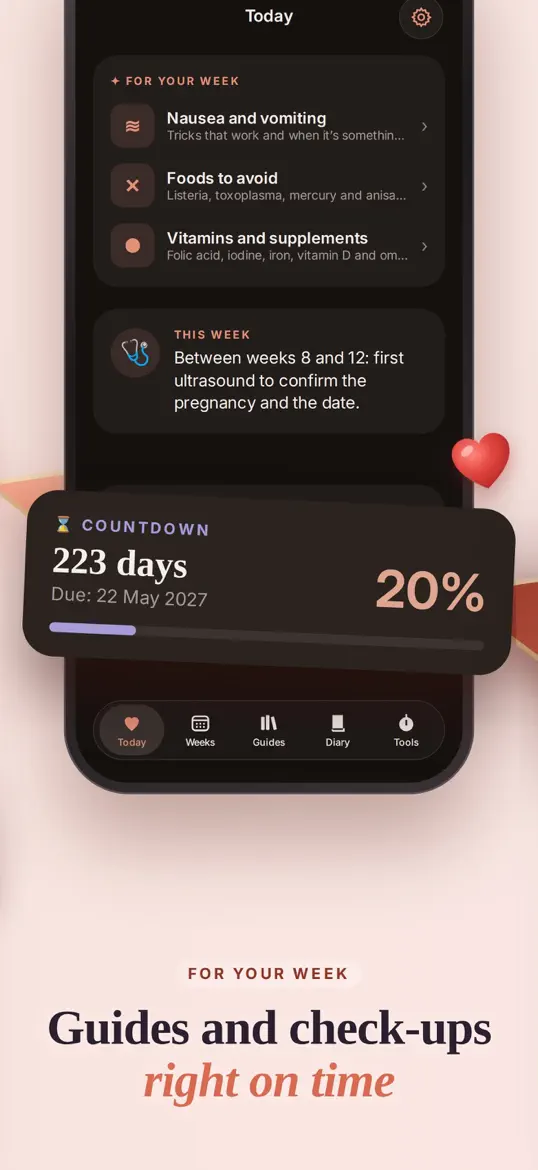
The first trimester lasts until 13 weeks and 6 days, counted from the first day of your last menstrual period. During this period, the development of essential organs and structures begins, according to ACOG. An app can help you track your pregnancy, but every pregnancy progresses at its own pace, and gestational age should be confirmed with your healthcare team.
It's normal to have questions before your first appointment. Write down the date of your last period if you know it, any treatments or supplements you're taking, any previous illnesses, and any concerns about symptoms. If you don't remember an exact date, say so: there's no need to make one up just to fill out a form. The healthcare professional can help you determine your gestational age.
Symptoms that may appear
Fatigue, nausea, breast changes, sensitivity to smells, and more frequent urination are common, though not universal, experiences. The absence of nausea does not diagnose a problem; nor does the presence of intense symptoms guarantee that everything is fine. The weekly information describes possibilities, not a personalised examination.
Noting when discomfort appears, how long it lasts, and whether it prevents you from drinking, eating, or resting can make your appointment easier. Avoid self-medicating or discontinuing chronic treatment based on what an app suggests. Review all medications and supplements with a healthcare professional who knows your medical history.
The NHS offers guidance on pregnancy symptoms that require help. If you experience bleeding, severe pain, fainting, sudden difficulty breathing, or are concerned about your condition, contact your local health services with the urgency the situation requires. Don't wait for a weekly notification.
First visit and prenatal care
ACOG recommends starting prenatal care in the first trimester and explains that the first visit allows for a review of medical history, medications, vaccinations, and testing options. The plan is tailored to your age, health, previous pregnancies, and personal circumstances. Bring questions about what checkups will be offered, when you will receive results, and how to get help between appointments.
Not all countries follow the same screening or vaccination schedule. A generic list can help you prepare for the conversation, but it shouldn't be taken as a confirmed appointment. Ask which tests are optional, what information they provide, their limitations, and how the results are communicated.
If you feel overwhelmed by many decisions, divide the questions into three groups: those that need to be resolved today, those that can wait until the next consultation, and those that require urgent help. Write down the answers in your own words. Asking them to repeat an explanation is reasonable and can prevent misunderstandings.
How to use the Latido Diary
The App Store listing for Latido describes a journal of feelings, symptoms, and weight, with weekly photos. Choose what you want to record and how often. A short note like "morning sickness, can drink water" may be more helpful than trying to fill in every field. If recording your weight makes you uncomfortable, talk to your team about what kind of follow-up you need.
The developmental illustration can be useful for sharing your pregnancy with a partner or family member, but it doesn't allow you to know the status of a specific embryo. Check for any discrepancies between the app's date and the clinical date before drawing conclusions. The app provides general information and cannot confirm a heartbeat, an ultrasound result, or a complication.
Before saving photos and health data, review the privacy policy and deletion options. The App Store listing advertises use with no account, no ads and no subscription, and an optional one-time purchase. Check the current version and terms for your device and country.
An informative routine that doesn't increase anxiety
Consult the relevant week when it helps you prepare for a conversation; you don't need to read every change several times a day. If a general text worries you, look for the specific question you want to ask your midwife. Limit your nighttime searches and avoid comparing your experience with other people's photos or stories.
A well-used app organizes information and memories. Pregnancy assessment takes place during visits and, when necessary, in emergency services. Keep local maternity ward phone numbers and an up-to-date list of medications handy; this practical information is often more helpful than a symptom prediction.
Questions to take to your first appointment
Prepare a short, prioritized list. Ask how the gestational age was calculated, when the next appointment will be, what tests are offered, how long it takes to get results, and what phone number to use if you need help. Add any medications, supplements, and products you take, including over-the-counter products. If you've had previous pregnancies or any medical conditions, mention your medical history. This information allows for a personalised plan and shouldn't feel like an exam you might fail.
Also ask which symptoms can be managed with general advice and which require same-day evaluation or emergency care. Answers may vary depending on the stage of your pregnancy and your medical history. Write down contact information. If an online recommendation contradicts what you were told, ask for an explanation; it may refer to another country, another condition, or an older version of a guide.
The first consultation may involve decisions that require time. Request official materials about available tests, their benefits, and their limitations. An app can remind you of questions, but it shouldn't make the decision for you. If you need an interpreter or support to understand the information, request that assistance from the centre before your visit, if possible.
Be careful about the information you consume
Searching for every symptom in forums can produce an endless list of extreme stories. Start with a reputable healthcare source and check its date and context. If the question is personal, consult the team familiar with your case. The words "normal" and "common" in a guide do not mean you should tolerate intense discomfort without help. Nor does someone else's experience predict the outcome of yours.
A note in Latido can help you remember when a symptom occurred without forcing you to constantly monitor it. Choose a routine that brings you clarity, such as a check before your appointment, and allow for days without logging anything. If you experience intense anxiety or thoughts that prevent you from sleeping, discuss it with a healthcare professional. Emotional well-being is also part of prenatal care.
To share good news with others, first decide what information you want to make public. A photo of your bump or an estimated due date are personal details. You can use a private journal and choose when to share it. Before switching devices, check how your notes are saved so you don't lose cherished memories; a general privacy promise alone doesn't clarify backup procedures.
If you have a partner or support person, you can prepare a short to-do list together: confirm the appointment, arrange transportation, and set aside time to discuss any concerns without constantly checking your phone. The pregnant person decides what personal information to share. They may also prefer to attend some appointments alone. Agreeing on these boundaries from the beginning makes it easier for the support to be helpful and respectful. If you experience intense mood swings, persistent anxiety, or difficulty coping with daily life, discuss it during your appointment; prenatal care can include emotional support and information on resources available in your area. Don't wait until you have a perfect explanation of what you're feeling to ask for help.
One way to reduce uncertainty is to distinguish between a question that can wait until your appointment and a symptom that needs attention today. Keep a written record of the centre's phone number, hours of operation, and alternative after-hours resources. If you're worried about a problem, describe its onset and progression when you call. That specific description is more helpful than comparing your symptom to someone else's. Allow yourself to enjoy the weeks without keeping a perfect record: the right appointments and support are more important than any diary statistic.
Frequently Asked Questions
Do I have to feel nauseous for the pregnancy to be normal?
No. Symptoms vary greatly and cannot, on their own, show how the pregnancy is progressing. Seek advice if you are concerned about a change or have any warning signs.
When should I schedule the first appointment?
Seek prenatal care as soon as you know you are pregnant; your local health service will provide the specific schedule.
Does Latido replace prenatal appointments?
No. The illustrations, lists, and records are meant to guide you and help you prepare questions. An app does not diagnose complications or replace the examinations, tests, and decisions of your healthcare team.
What do I do if the baby's movement pattern changes?
Contact your midwife or maternity unit immediately if movements become less frequent, weaker, or stop. Don't wait until a counter reaches a certain number or until the next day.
Sources and review date
Content reviewed on 11 November 2026. Sources: ACOG, Prenatal Care; ACOG, Development; NHS, Symptoms That Require Help. This information is general and does not replace individual assessment by a midwife or healthcare professional.