How to improve reading fluency if your child reads word by word?
Transparency: Letruga is made by AppRadar, the publisher of this website.
Choose a sentence your child can read and read it yourself with the intonation you would use in conversation. Then read it together and let your child repeat it alone with a specific purpose, such as asking a question or warning a character about something. Listen for whether they keep to the words in the text and convey what the sentence says.
What to listen for when your child reads aloud
Imagine you're reading a story. Your child recognizes all the words of a question, but leaves the same silence between them. When they finish, they might not even realize that a character was waiting for an answer. You can intervene right there. Take on the role of the character asking the question, look at your child, and read the line as if you really needed their answer. What answer would they give?
Reading fluency combines accuracy, an appropriate pace and expression. A slow reading can convey a warning very well. A fast reading can obscure who is speaking or change an important word. To decide what to practice, focus on a detail you can describe. “They stopped at a new word” calls for different help from “They read every word correctly but separated words that belonged together.”
Try reading the sentence as it appears in the book. If there's a word that still needs to be built sound by sound, give the child time to do so. If they don't know its meaning, explain it using something they do know. Then, start again from the beginning of the sentence. This gives them another chance to understand the whole sentence, including the part they already read independently.
Choose a text that lends itself to a second reading
Look for a scene with a purpose that is easy to imagine. A dialogue in which someone asks for help, instructions for setting up a game or a note inviting someone in can all work. Read the passage before offering it to your child. If almost every line requires a pause to explain vocabulary or teach letters, save that text to read to them yourself and choose a more accessible passage to practice together.
Invite your child to choose their turn. Perhaps they want to announce the arrival of an animal heard behind a door. In that case, they simply need to read that line. You can provide the introduction and continue afterward. Giving them a line that someone in the story needs to hear gives them a reason to rehearse it again: they want their warning to arrive on time.
The page layout also matters when choosing a text. Open the book at the scene and look at where each sentence ends. If a question continues on the next line, show your child where it ends before starting. You can follow the line with a piece of paper placed underneath. For texts in which you can share the roles, see these criteria for choosing short stories for beginning readers.
Three ways to support your child's reading aloud
Reading a sentence as an echo
Read a line while your child follows the words with their eyes. Give them a moment to think about who is speaking, then ask them to read the same line. Choose just one detail to focus on. If a character asks where their companion is, for example, you can rehearse how to ask for that information. Let the child find their own intonation that makes sense in that scene.
Two voices at the same time
When he's too shy to start reading alone, offer to read with him. Share the page so you can both follow along, and adjust your voice to his pace. As soon as he takes the initiative, lower your volume slightly. If he stops again, return to your previous volume and continue reading beside him. You can also agree on a simple signal, like tapping the table when he wants you to read with him again.
Taking turns to read a dialogue
Assign the roles and decide together who will read the narrator's parts. If he's still having trouble knowing when to speak, point to his line just before his turn. After the first reading, switch roles. Hearing someone else interpret the same sentence might help him discover a detail he wants to change. Give him a chance to try it, even if his version sounds very different from yours.
How to help when they lose their rhythm mid-sentence
If he stops, first look at where he is on the page. Sometimes simply pointing to the next line is enough. If he points to a specific word, listen to him try to read it. You can help him with the missing sound or say the word if he needs to hear it. Once he's done, go back a few words so he can recapture the idea he was expressing before the pause.
If your child changes a word and alters the meaning, point to the written word and say something specific: “Here the character is still outside. Let us read this part again.” If your child notices and corrects themselves, wait until they finish. Afterward, you can describe what they did: “You went back to the beginning of the line, and this time it was clear who opened the door.” This helps them know which strategy they can use again.
When all the words are read correctly, try changing the pause yourself. Read once, interrupting an expression you would normally say in one breath. Then read the same sentence, grouping the words together as in a conversation. Ask which version helps them imagine the scene better. A brief, gentle example is enough. Avoid imitating your child's reading style to show them the difference.
What to do with a text your child already knows
A second reading can have a specific recipient. Suggest that someone at home listen to the game instructions and do exactly what they hear. If the listener moves the wrong piece, go back to the instructions to figure out what happened. The reader may have missed a word, the listener may have jumped ahead, or the instructions may be open to two interpretations. Working it out together gives the rereading a real purpose.
Another day, open a different scene from the same story and let your child choose a sentence to read for the first time. Listen to whether they decide for themselves where to stop and if they go back to the text when something sounds strange. If you want to remember what you observed, write down the sentence and the specific help they used. That detail will be more useful the next time you read it than a general impression like "they read better today."
To practice words made up of letters already learned, Letruga offers sentences and stories with questions. You can choose a sentence from the story you are reading and take turns with your child voicing a character. Before repeating it, ask them who the character is speaking to. Their answer will give you a reason to choose a calm, cheerful, or worried tone.
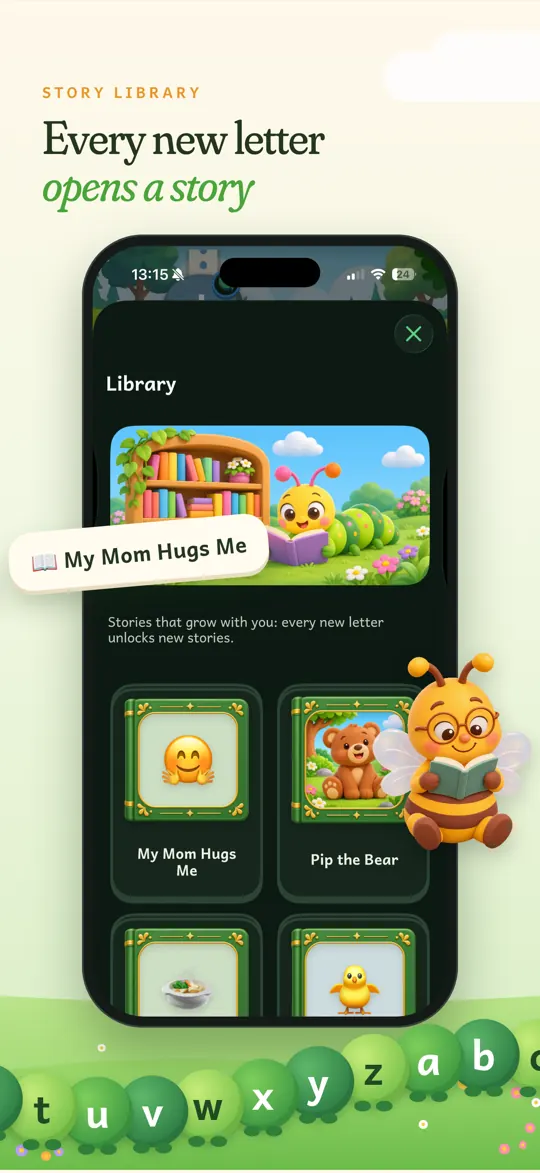
Letruga is an app from AppRadar, the publisher of this website. It's aimed at children aged 3 to 7 and is free to start, with in-app purchases. It's available for iPhone and iPad on the App Store and for Android on Google Play.
When to seek guidance on your child's reading
If your child repeatedly needs help recognizing the same words in texts they've practiced, tell their teacher. Provide a specific example of what happens when they read alone and how it changes when you read together. You can ask the teacher to show you how they help your child with that type of sentence. This will give you a reference point to use when supporting them at home the next time a similar difficulty arises.
Frequently Asked Questions
Do I need a stopwatch to practice at home?
To read a dialogue as a family, all you need is the text and someone to listen. You can check if the question is understood, if all the words are audible, and if the child finds a comfortable rhythm for saying them.
Is it advisable to repeat an entire page?
Choose the length according to what you want to achieve. To rehearse a character's entrance, their dialogue and the preceding sentence are sufficient. If your child wants to retell the story from the beginning, let them expand on the reading.
What do I do if he recites the story from memory?
Enjoy the part he remembers. Then, point out on the page where his favorite passage appears and invite him to follow along with his eyes as he reads. To practice with something new, choose another passage of similar difficulty.
What if your child prefers to read quietly?
Your child can practice the sentence quietly, then choose a single line to read to you. You can also start and let them read the second character's reply. That way, they will know exactly when it is their turn to speak.
Should I correct the accent he/she reads with?
Listen to see if the words your child pronounces match what's written and if you can understand what they're saying. Your child can act out the character using the variety of language they speak at home and give them a voice different from yours.
Sources
- Reading Rockets. Paired reading and alternating turns.
- Reading Rockets. Guidelines and activities for reading fluency.
- What Works Clearinghouse. Fundamental reading skills and practice with texts.