How to teach a child to read at home without rushing
Transparency: Letruga is made by AppRadar, the publisher of this website.
Start by speaking and listening
Learning to read doesn't begin the day a child memorizes the alphabet. Before and during that process, talking about what they see, listening to stories, playing with rhymes, and recognizing sounds strengthens oral language. The EEF highlights that early reading integrates decoding and comprehension; listening to stories and expanding vocabulary are part of the same process. Take time to ask what they think will happen in the story, how a character feels, or what a new word means.
There's no need to turn every meal or walk into a lesson. You can find letters on a poster, play clapping games for the syllables in familiar names, or compare two words that begin the same way. If the child isn't enjoying the game, change activities. Gentle consistency matters more than a long session. Observe how their school introduces sounds and letters to avoid receiving conflicting instructions at home.
From sound to letter
When teaching a letter, pronounce the sound it represents in a simple word and show its shape. The letter's name is also valuable, but reading a new word requires associating letters with sounds and combining them. Try a few familiar correspondences before adding others. Ask the child to identify the initial sound, listen for it in another word, and recognize the letter without always relying on the same picture.
The research summarized by Reading Rockets favors explicit and systematic teaching of letter-sound relationships, with opportunities to apply what has been learned to words, phrases, and stories. This does not mean endlessly repeating a worksheet. Alternate between voice, objects, tracing, short games, and shared reading. The explanation should be clear; the pace, flexible.
Join syllables and read new words
In Spanish, combining a consonant with vowels allows you to build syllables like ma, me, mi, mo, and mu. Then you can form simple words with letters they already know. Avoid asking them to guess a word just from the picture: cover the image for a moment, point to the letters, and listen to how they combine the sounds. Reveal the picture afterward to check the meaning.
If they guess a familiar word but not another constructed with the same sounds, go back to the combination. The goal is for them to be able to read something new, not to memorize a card. Also, don't correct every hesitation with an immediate response. Give them a moment to try, model it once if necessary, and praise the concrete process: "You've put the sounds together," instead of simply saying "You're very clever."
A ten-minute routine
You can organize a short session in four parts: listen to or remember a sound, read two or three syllables or words, play at writing or forming a word, and share a story page. There is no set duration; finish before fatigue turns the practice into an argument. Repeat the letters that were difficult the next day without presenting the review as punishment.
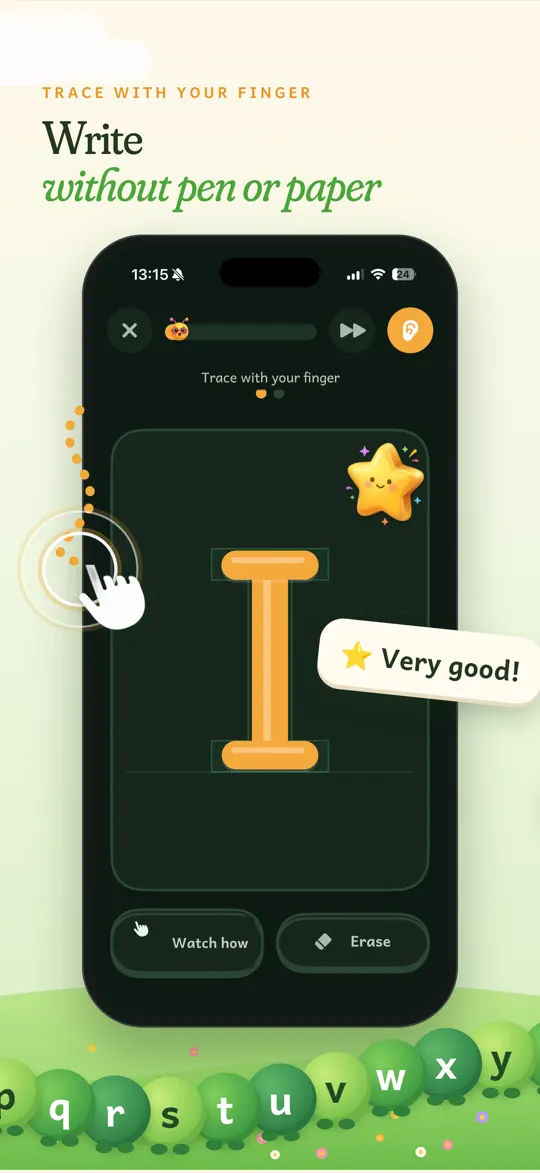
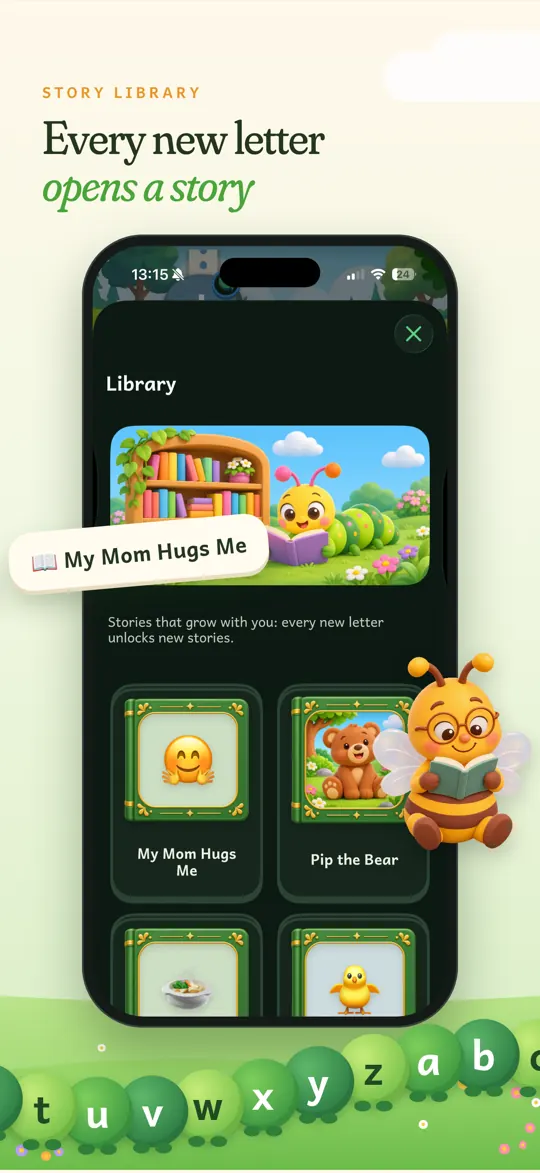
The Spanish app listing for Letruga describes a short daily review of what the child finds hardest, syllable and rhyme games, tracing, and 22 stories that unlock gradually. An adult can monitor progress and set a time limit. Use it as a station within your routine: after screen time, read a physical book or write a real note to someone at home.
Read to understand and enjoy
When the child deciphers a sentence, ask them what happened. An answer doesn't need to be a test; they can point to a character, predict the ending, or relate the story to their own life. Books read aloud by an adult may contain much richer vocabulary than a child can decipher alone. Maintain both types of reading.
Do not insist that the child read every story independently. You can read first, let the child join in with a familiar word and retell the story together. This builds vocabulary and a desire to read. The EEF cautions that one isolated skill is not enough for long-term reading success: sounds, comprehension and language develop together.
Adjust the path without comparing children
A child may know letters but need help combining sounds; another may decode words but not understand a long sentence. Identify the specific difficulty with their teacher before looking for more exercises. If the school uses print, capital letters, or cursive, try introducing the same format at first. Letruga offers these three options to match school handwriting.
Avoid using another child's age as a measure of progress. If there is persistent frustration, suspected hearing or vision difficulties, or a concern shared with the school, seek professional guidance. An app does not diagnose dyslexia or other needs. It can show where an activity stops, but assessment and support belong to professionals and adults who know the child.
Four-week adaptable plan
In the first week, listen to stories and play with initial sounds and rhymes. Choose two or three letter–sound correspondences the child is already learning in class; do not introduce twenty letters at once. In the second week, combine them with vowels or with sounds appropriate to the language they are learning to read. Note what they can do without a cue. If they still need a demonstration, stay at that stage and change the examples.
In the third week, build new words using only what you already know and write a short note with one of them. It doesn't matter if the message is simple: reading to communicate an idea gives meaning to the exercise. In the fourth week, incorporate sentences and a short, decodable story, while an adult continues reading richer stories aloud. This plan doesn't prescribe achievement dates; it's a way to distribute practice opportunities that you can slow down or speed up with the teacher.
At the end of each week, record one specific observation: “recognizes m without a picture”, “blends ma”, “reads a new word” or “describes what the character did”. Avoid labels such as “doing badly” or “advanced”. An observation helps you decide the next step and can be shared with the school. If the response changes from day to day, do not assume the learning has been lost: sleep, interest and context all affect a short session.
What to do about common mistakes
If the child confuses the name of a letter with its sound, model both separately and return to the word. If they read each syllable but cannot join them, repeat the sequence with your finger under the word and pronounce the complete form without making it a race. If they always wait for the picture, remove it before reading and use it afterward to check the meaning.
When your child guesses a word from its first letter, ask them to look at all the letters and check if the ending matches what they said. There's no need to correct them harshly. A question like "What sound comes next?" provides a helpful clue. If they read mechanically but don't understand, ask a simple question about the character or action and explain vocabulary. Reading involves accuracy and meaning.
If difficulties persist despite appropriate support, talk to the child’s teacher. A specific discussion about what happens in class and at home will help you agree on consistent strategies. Do not attribute the problem to a lack of effort or look for a diagnosis in a progress dashboard. The app can provide examples of difficulties, but it does not replace an individual educational assessment.
A final check before moving forward
You don't need to buy new materials to follow the plan. A borrowed book, handmade cards, and conversations about what's around the house are enough for many of these exercises. If the child is interested in a word in a story they can't yet read, tell them the word and enjoy the story together: not every encounter with a text has to be a decoding test. Shared reading also models intonation, vocabulary, and questions. Celebrate small, verifiable signs, such as recognizing a sound on another poster or explaining what happened on a page. If no progress appears despite appropriate opportunities and school support, consult the teacher without waiting for the app to flag a problem.
Frequently Asked Questions
At what age should they read?
Development varies and also depends on the education received. Talk to the school about appropriate expectations for the child and the language they are learning to read in.
Should I start with the letter name or its sound?
Both can be taught, but to decode new words it is essential to link letters and sounds and practice combining them.
How much app time per day?
Use short sessions appropriate to their age and interests, with a family-friendly limit; balance screen time with conversation, play, and books.
What if my child only recognizes the picture?
Ask the child to read the word before showing the picture and check if they can apply the same sounds to another word.
Does Letruga replace school?
No. It serves as a complementary practice and should be accompanied by shared reading and educational follow-up.
Sources and review
Revised November 11, 2026. Sources: EEF, Early Reading; Reading Rockets, Phonetics; Letruga Spain. The practical recommendations are editorial. Features, prices and languages may change: check your store listing before paying.