Schulte Table: What it is and how to use it
Transparency: Brain Games is made by AppRadar, the publisher of this website.
A Schulte table is a grid of jumbled numbers that are searched for in sequence, usually from 1 to 25. You can practice on paper and time yourself, but improvement in this task does not demonstrate an overall improvement in attention or reading.
The rule in a sentence
A Schulte table is usually a 5 × 5 grid with the numbers 1 through 25 arranged randomly. The task is to find them in order, pointing to them or naming them, while timing yourself if desired. It can be played on paper and doesn't require an app. One attempt being faster than another demonstrates practice in this visual search, but doesn't prove an overall improvement in attention or reading skills.
To begin, print a grid with large numbers, sufficient contrast, and space between squares. Explain the sequence, check that the person understands the numbers, and play a round without a timer. Afterward, you can time a new grid, but don't use one time as a standard for all ages. A child, a person with low vision, and someone familiar with the game are not starting from the same conditions.
What it actually exercises
The task combines number recognition, visual search, sequence tracking, and motor decision-making while pointing. The total time depends on all these components and familiarity with the format. If someone makes a mistake while counting, the problem isn't necessarily attention; if they are slow to tap on a phone, tactile dexterity also plays a role.
A laboratory study with 27 schoolchildren aged 8 to 11 examined versions of a search puzzle on a Schulte grid, with either black or two-colored numbers. It found differences in time taken depending on the task and the color. It was not a training trial to demonstrate that playing the puzzle for weeks improves everyday concentration. Citing it as evidence that the table “cures inattention” would be incorrect.
The table can be an entertaining and specific challenge. It focuses on visual search or sequencing skills within the exercise, not on "activating the whole brain." A review of brain-training interventions from commercial programs shows how important it is to separate progress on similar tasks from broader effects on daily life.
How to draw a simple table
Draw five rows and five columns of the same size and place each number from 1 to 25 only once in mixed positions. Check that every number is there before giving it to someone else: a duplicate number makes it impossible to finish, and a missing one can cause frustration. Keep the size legible. If you prepare several tables, use different arrangements; memorizing the fixed location reduces the search challenge.
For a child's first practice, start with 3 × 3 and the numbers 1 to 9 if they already know them. This is an adaptation of the game, not the classic 25-square version. Increase the number of squares as the task becomes understandable and enjoyable. If the child is still learning to count, point to the numbers together and avoid adding time pressure.
You can use colors, but remember that they add another variable. If you color a target number or alternate between red and black, you're no longer comparing the exact same difficulty as with a monochrome chart. Note the variant you use if you want to track your own progress. Consistency of rules matters more than a supposed universal record.
A pressure-free practice session
Place the table at a comfortable distance and explain whether it is pointed at, named aloud, or pressed. Give an untimed test to check for understanding. In the next round, use a different grid and measure from the first search to 25. If there is an error, decide beforehand whether to correct it before continuing.
One or two rounds should be enough to enjoy the challenge. Rest your eyes and switch to another activity if fatigue or irritation sets in. Repeating the same grid many times teaches you where the numbers are; if you want to practice searching, change the arrangement. If you're playing with someone else, compare strategies, not just seconds.
One strategy involves visually scanning rows or zones, another is to find the next number without moving your eyes much. There's no obligation to fix your gaze on the center, nor is there a validated technique that improves peripheral vision. Try comfortable methods and see which one works best for the task.
What does improving your time mean?
A reduction in time may reflect that you've already grasped the rule, recognize numbers more quickly, or are more adept at using the mouse or screen. To make a fairer comparison, use new grids of the same size, with the same answer format and similar conditions. Even so, random differences between grids can still affect the difficulty.
If your goal is to read faster, a Schulte chart doesn't measure comprehension, vocabulary, or sentence reading. Don't present an improvement on the chart as a guaranteed increase in reading speed. Practicing reading texts and discussing their meaning are different tasks.
If a school or family uses this activity, it's important to define what they are observing: number sequencing, searching, or tolerance of a game with rules. A single instance of this activity does not diagnose ADHD, dyslexia, or visual problems. For persistent concerns about learning or vision, seek a proper evaluation.
Where does a brain game app fit in?
Brain Games, according to its description, includes attention and speed challenges across eight areas. It can be an alternative for exploring other visual and logic games in short sessions, with internal progression and level adaptation.
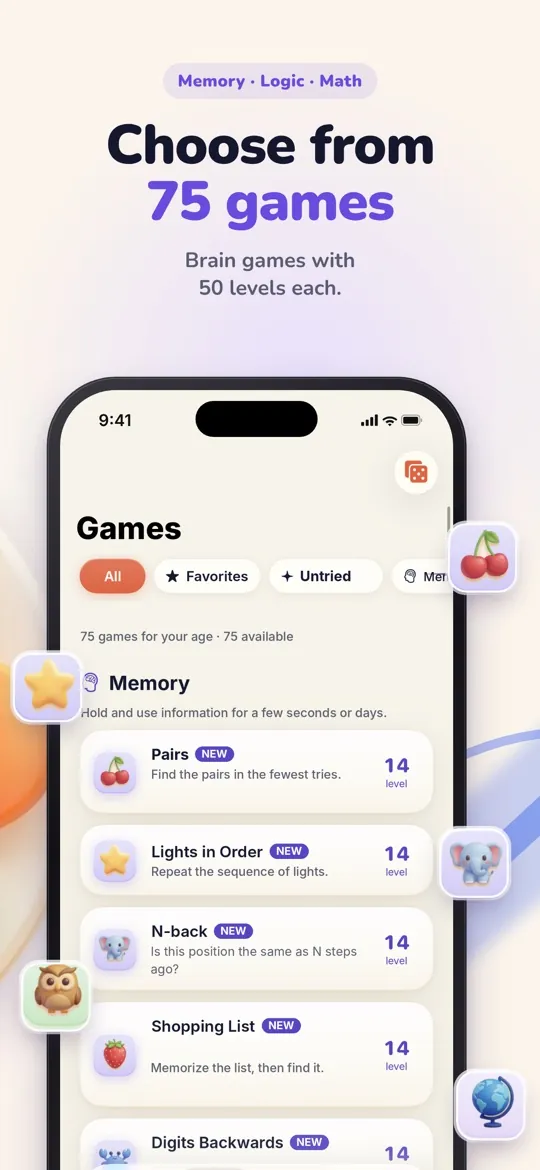
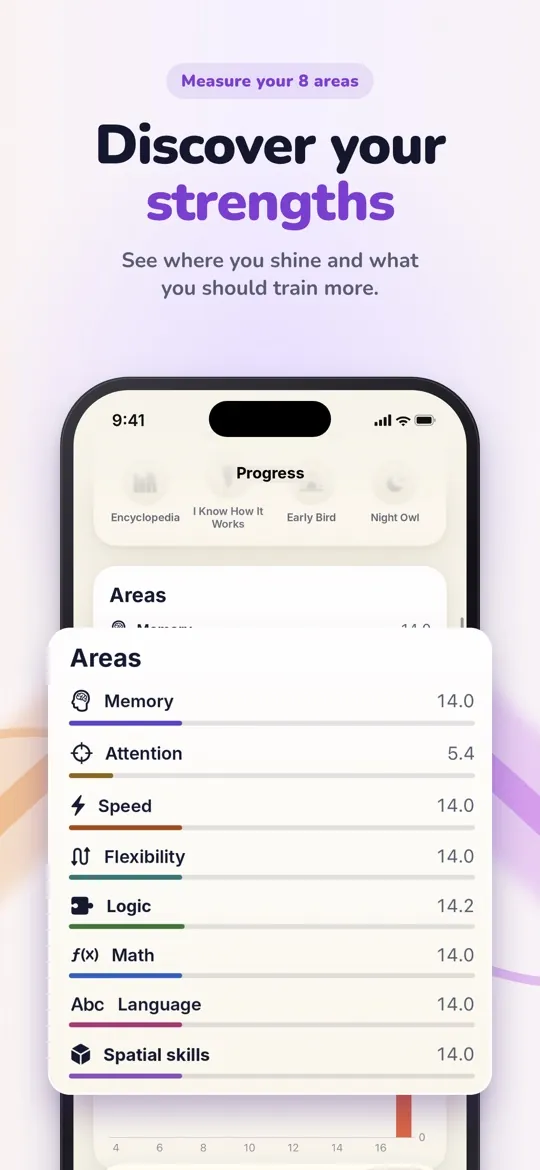
The free version allows you to continue practicing and progressing every day. Pro expands the number of games in the plan and the free selection from the catalog. If you're only interested in the classic Schulte table, you can prepare it on paper without paying or installing anything. If you want a variety of challenges, check out the game's entry in the App Store and see if its rules suit you.
The NIA advises caution regarding claims of general benefits attributed to commercial apps. The Schulte table can be a challenging game; do not treat it as a treatment or clinical assessment. That honesty makes it possible to recommend it for what it does offer: a visual search with clear rules.
Variations for playing together
Instead of racing against the clock, one person can say the next number and another can point to it. You can also switch turns every five numbers or explain how you found one difficult. For children, collaboration can reduce frustration and open up conversations about numbers and positions.
If you're using a digital format, button size, contrast, and device latency can affect the result. Don't compare seconds on a large sheet of paper with a small screen. On paper, avoid excessively small font and ensure the table is well-lit.
Finish when there's still interest. A good gaming experience doesn't require beating a high score every day. Curiosity, understandable rules, and the pleasure of solving the next puzzle are reasons enough to come back.
How to register a table without inventing a diagnosis
If you want to keep track of your Schulte practice, note the date, grid size, new setup, response method, and approximate time. This information helps you compare similar games. Don't treat it as a "brain age." A small table with large numbers and one with tiny squares don't require the same level of practice, even if both contain numbers from 1 to 25.
When playing with a child, observe whether they know the number sequence and understand where to look. If they skip a number, go back to the previous one together. Avoid saying their attention is "wrong" because of a mistake. If someone needs glasses or a larger screen, adjust the materials before taking any measurements. A legible grid allows everyone to enjoy the game without confusing vision, coordination, and searching.
The table can also be cooperative: one person looks for the odd numbers and another for the even numbers, or they alternate blocks of five. This variation no longer measures the same amount of time as the individual format, but it can be more fun. Describe the rule before comparing results. If a site claims to double reading speed using Schulte, ask for evidence of reading comprehension in appropriate essays; finding numbers faster doesn't answer that question.
Frequently Asked Questions
What is a Schulte table?
A grid, usually 5 × 5, with numbers from 1 to 25 jumbled up, which are searched for in sequence.
Does it help you read faster?
There is insufficient evidence to suggest that improving search time will increase reading speed or comprehension.
Can children use it?
Yes, as a game if you know the numbers; start with fewer squares and no time pressure.
How many times should I practice?
There is no established therapeutic dose. Choose short rounds and stop if it becomes tiring or frustrating.
Is it in Brain Games?
The screenshots and information sheet consulted do not confirm that exact table. The app does advertise other games of attention and speed.
Sources
Revised November 12, 2026. Schulte Visual Search Study; Commercial Games Review; App Store Spain. Commercial features are taken from store listings; scientific conclusions are not the result of an evaluation of this app.